




Unit 2: Resistance and Resilience: Art as Tool of Resistance
Time Frame
- 1–2 class periods
Materials
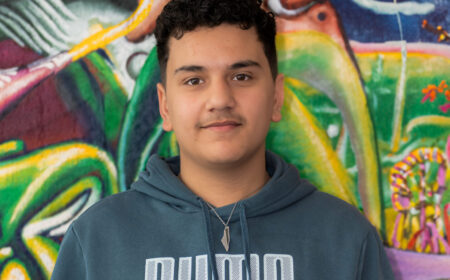
- Green Card Entrepreneur Voices – Dario Meija’s story
- Slides
Connections to the 7 Cs of Ethnic Studies
- Center: centering knowledge from community, elders, families and lived experiences.
- Connect: learn about Mexican and Latino resistance movements locally and globally, historically and today
Instruction
Day 1 – Ignite: Intro/Warm-Up
Welcome, agenda, announcements, learning target (slide 1)
a. Warm-Up Question: When was a time you overcame a fear or hardship?
i. Write in a notebook! (2-3 minutes)
ii. Turn to a neighbor and share (2-4 minutes)
iii. Share out to the class; pick a few students to share (2-3 minutes)
b. Mental health: Today’s lesson discusses racism and experiences of exclusion within Latine communities. Some may personally connect to these experiences in different ways. Please take care of yourself; participate in ways that feel comfortable and respectful.
Chunk: Resistance and Resilience—Latinos Are NOT a Monolith
c. Vocabulary (slide 2)
i. Vocabulary: Monolithic Thinking (slide 2) (source)
-
-
-
- “the tendency to view cultures, experiences, and people from a single perspective”
- Oftentimes, people believe that all Latino/a/x people have the same culture, experiences, traditions or beliefs. But from country to country, and even within countries, Latino/a/x people are so different!
-
-
d. Example: Latino/a/x are not a monolithic group, even within one country!
i. Slide 3: Afro-Latinos: people with descendants from Africa (source)
-
-
- Watch: https://www.youtube.com/watch?v=1XmfL62xozI
- As students watch, have them think/answer: What is something that Black Mexican people want non-Black Mexican people to know?
- Pick 2 people to share with the class.
-
ii. Slide 4: Indigenous people: native peoples to the land prior to European colonization
-
-
- Watch: https://www.youtube.com/watch?v=tQ9Uwq5kXY8
- As students watch, have them think/answer: What is something that indigenous people in Mexico are fighting for?
- Pick two people to share with the class.
-
iii. Puerto Rico is technically a US territory, but its rich cultural history makes it distinct from the rest of the United States.
-
-
- Ask students: Let’s make a list of things you think of when you think of Puerto Rico. (Have students shout out their answers and write a list on the board; Bad Bunny is likely to appear on this list.)
- There may be lots of buzz around these ideas, but for many years, Puerto Rico has wanted to establish independence from the US—all the way back to the early 1900s.
- Today, even stars like Bad Bunny are calling attention to the ongoing issues that Puerto Rico faces, like environmental disasters due to climate change and the economic/social inequalities people face there, despite being a part of the “exceptional” US.
a. Play Bad Bunny’s “El Apagon – Aqui Vive Gente.” (Disclaimer: It does have swearing in Spanish, and maybe some explicit dancing. Watch to see what scenes are most appropriate for students prior to showing it.)
-
iv. Slide 5: Art as a form of resistance and resilience
1. Places all around Latin America have different movements of resistance and resilience.
a. Ask students: How did Bad Bunny use art to call attention to what happens in Puerto Rico? (This could be your exit ticket, after which you continue with the next part tomorrow.)
2. Dance, music, attire, culinary arts, and more!
v. Recap: Latino/a/x are not a monolithic group, even within one country!
1. Even within Mexico, people come from all sorts of different racial and even cultural backgrounds. (Break text, new paragraph/line.) Now imagine we expand this map by thousands of more miles! (Insert map of Central and South America, including islands in Caribbean.)
Day 2 – Chew: Resistance and Resilience in Our Identities and Intersectionality (slide 6)
e. Class work time instructions
i. “So what happens when you have many identities—what do we do to honor all of them?” (slide 6 still)
f. Slide 7: Part 1: Pick a partner
i. Read the story of Dario Meija (have them printed).
ii. Annotate Dario’s story.
-
-
-
- Circle words you do not know.
- Highlight sections where Dario shares parts of his story that were hard/difficult for either him or his family.
- Underline sections where Dario shares parts of his story that honor his identities or bring him joy.
- Star sections that demonstrate identities (gender, culture, language, race, etc.).
-
-
g. Slide 8: Part 2: Add a pair to your pair!
i. Share your annotations and discuss reflection questions together.
ii. Partner Discussion Questions (record or walk around during this)
-
-
- Pick an annotation that stuck out to you—why did it impact you?
- What are some ways Dario finds joy in his Ecuadorian identity?
- How does Dario’s cultural and racial identity impact his work?
- Why does Dario share his story?
- In what ways does Dario demonstrate resilience?
-
Review: Large group whipshare discussion (can be expanded if time allows) (slide 9)
iii. What can resistance and resilience look like?
Resource List
- Contextual resources for further learning on topics of colonization in Latin America https://latino.si.edu/learn/latino-history-and-culture/latino-history/early-latino-history https://timemaps.com/civilizations/latin-america-the-colonial-era/
- Contextual resources for further learning on the Spanish Caste system www.indigenousmexico.org/articles/understanding-the-mexican-casta-system-a-historical-and-cultural-perspective
- Contextual resources for further learning on anti-Blackness in Latin America https://bookshop.org/p/books/racial-innocence-unmasking-latino-anti-black-bias-and-the-struggle-for-equality-tanya-kater-hern-ndez/8232518903b7c4be?ean=9780807020135&next=t&, https://www.abfe.org/blog/confronting-colorism-and-anti-blackness-latinx-community
- Contextual resources for indigenous erasure in Latin America www.oah.org/process/arena-indigenous-caribbean www.researchgate.net/publication/393269447_Latin_American_Mestizaje_A_Tool_to_Erase_the_Indigenous
- “Diversity Matters: Dismantling Monolithic Thinking to Create an Inclusive Work Environment” www.culture-principles.com/diversity-matters-dismantling-monolithic-thinking-to-create-an-inclusive-work-environment
- “Resistencia Afroamericana: La Historia de Yanga” www.youtube.com/watch?v=FIqLzOtzFp4
- Further learning for capoeira, a Brazilian martial art/dance form www.upr.org/arts-and-culture/2016-08-30/roots-of-brazil-the-martial-art-form-capoeira-is-preserving-history-and-tradition
- Further learning for mole https://laroussecocina.mx/palabra/mole www.gob.mx/inpi/articulos/conoce-la-maravillosa-historia-del-mole
- “Colombia: Top Local Music That Reflects the South American Country’s Culture and Tradition” www.latinpost.com/articles/154478/20220315/colombia-top-local-music-reflects-south-american-culture-tradition.htm
- Liberated Ethnic Studies Model Curriculum Values and Principles (7 Cs) https://drive.google.com/file/d/1cGOs7rsY9wT2qI-yIQh5dye8snRjGYxr/view
Unit 3: Healing and Future Building – Hmong Healing and Future Building
Time Frame
-
2 class periods
Materials
Connections to the 7 Cs of Ethnic Studies
-
Cultivate: using traditional Hmong arts as an opportunity for identity affirmation and healing
-
Conceptualize: using Hmong arts as a tool for visioning, futurisms, world-building, hope, healing, and collective possibilities
Instructions
Important: Please give the class a general trauma warning and create a safe space for the class before beginning the lesson. Today’s class will explore how people use art and music to process hard times and heal. Some of our topics will touch on war, leaving home, and intergenerational trauma, the stress or sadness that families carry across generations, and may trigger certain feelings. Please remind students to be respectful of one another, provide space as needed, and allow students to skip or pass on discussions as needed. Also, remind students to reach out to their mental health providers and tell them these topics were brought up and discussed in class, and made students feel a certain way. Use your best professional judgment to warn the class.
Ignite: Sound Challenge
-
Play a short sound clip of either the qeej or the raj without showing the instrument (instrument slide).
-
Ask the class: If this sound were a person talking, what emotions might they be feeling?
-
Sentence Starter: The sound feels . . .
-
-
Show an image of the instrument. Explain to the class what this instrument is.
Turn and Talk
What song do you listen to when you are sad or down? Why does music work better than just talking to a friend?
Chunk: Hmong Musical Instruments
-
Watch an excerpt of Among Mountains, from 29:00 to 43:00.
-
Neng Thao explains the instruments and their connections to the Hmong language, along with how music is an extension of the language and is often used for courting.
-
Explain how the instruments mimic the tones of words when they are played. The sounds are like singing a message to express one’s feelings, singing to a friend, or singing to one’s ancestors. Have students try to hum the tone of their own name.
-
Clearly explain to students how music allows for expression, especially feelings. Traditionally, it is a cultural taboo to openly talk and share feelings and emotions, especially while courting. Music allows individuals to express their feelings of love, happiness, or sadness to one another.
Turn and Talk
Think about a song you put on when you are down. Why does hearing this song feel safer or more comforting than talking with a friend?
-
Sentence Starter: When I am overwhelmed, I like to listen to . . .
Chunk: Steve Thao
Watch the “Steve Thao” video from Green Card Entrepreneur Voices.
Group Task
-
Watch: Watch the video together.
-
Discuss: How did art help Hmong to express their feelings? How can art help Hmong understand their family’s history? How can art help Hmong heal from their past?
-
Analyze: Thao said, “Art is a way for us to tell our own stories, rather than having others tell them for us.” What does he mean by this? How can you use art to tell your story?
-
How do you express your feelings?
-
How can you use art to express your feelings?
-
Chew: Paj Ntaub Artwork
Introduce traditional Hmong paj ntaub, which is often used to tell stories, especially through story cloths. Share how story cloths started in the refugee camps as a way for Hmong to use their talent to make money. They would make cloth by hand and create story cloths of their journey, history, and experiences. Show examples of story cloths and point out specific symbols and what they represent. (See Flowery Cloth link below.)
Mini-Story Cloth Assignment
Create a three-panel story cloth template.
-
Template design: three squares side by side by side, with a border consisting of Hmong symbols (mountains and/or snails)
-
Students will draw in each square.
-
Square 1: Draw an image of a challenge you faced.
-
Square 2: Draw something that helped you to feel better or heal (family, music, art, etc.).
-
Square 3: Draw your future hopes for yourself.
-
-
-
Students will also write three sentences about their images, one for each square.
-
My art shows _________.
-
It helps me feel ______ because _____.
-
__________ gives me hope for the future.
-
Review: 3-2-1 Exit Ticket
On a slip of paper (regular notebook paper or sticky notes) or a digital form, students must write and turn in:
-
Three things they learned today
-
Two symbols that can be found on a Hmong story cloth
-
One way art can help heal
Multilingual and ELL Support
-
Provide a sentence stem for reflection:
-
Art can serve to help with . . .
-
Art can help heal . . .
-
Art allows me to understand…
-
I express myself by . . .
-
When I feel _______, I listen to . . .
-
Vocabulary and Definitions
-
Paj ntaub: traditional Hmong art that is made by a needle stitching onto a fabric cloth
-
Art: something you make using imagination to share ideas and feelings, to make something beautiful, or to show and tell how you see the world
-
Healing: the process of getting better, stronger, or whole again after you have been hurt, in either your body or feelings
-
Hope: the belief that something good can happen
-
Symbol: a picture that stands for a big idea
Resource List
-
Hmong Instruments www.learnabouthmong.org/default_active_page_id=31.html
-
Paj Ntaub https://learnuake.org/articles/hmong-culture/embroidery/
-
Flowery Cloth https://drive.google.com/file/d/1xbPy-QN1b9Oq90H28k_mWvihBg3xabvG/view
-
Among Mountains video www.youtube.com/watch?v=VpT5bHrezxE
-
Green Card Entrepreneur Voices – Steve Thao’s video
-
Liberated Ethnic Studies Model Curriculum Values and Principles (7 Cs) https://drive.google.com/file/d/1cGOs7rsY9wT2qI-yIQh5dye8snRjGYxr/view
-
“Birdsong: the dying whistled language of Hmong in northern Laos” video – www.youtube.com/watch?v=_KIYwCieaMs
Unit 2: Resistance and Resilience: El arte como herramienta de resistencia.
Periodo de tiempo
- 1-2 períodos de clase
Materiales
- Green Card Voices– La historia de Darío Meija
- Diapositivas
Conexiones con las 7 C’s de los estudios étnicos
- Centro: Centrándonos en el conocimiento de la comunidad, los ancianos, las familias y las experiencias vividas.
- Conectar: Aprender sobre los movimientos de resistencia de los mexicanos y los latinos a nivel local y global, del pasado y de hoy.
Instrucción
Día 1 – Encender: Introducción/Calentamiento
Bienvenida, agenda, anuncios, objetivo de aprendizaje (diapositiva 1)
a. Pregunta de calentamiento: ¿Cuándo fue una ocasión en que superaste un miedo o una dificultad?
-
- ¡Escribe en un cuaderno! (2-3 minutos)
- Habla con un compañero y comparte tu experiencia (2-4 minutos).
- Compártelo con la clase; elige a algunos estudiantes para que compartan sus experiencias (2-3 minutos).
b. Salud mental: La lección de hoy trata del racismo y las experiencias de exclusión dentro de las comunidades latinas. Algunos se sentirán identificados con estas experiencias de diferentes maneras. Por favor, cuídense y participen de maneras que les resulten cómodas y respetuosas.
Fragmentar: Resistencia y resiliencia: los latinos NO son un monolito
c. Vocabulario (diapositiva 2)
i. Vocabulario: Pensamiento monolítico (diapositiva 2)(fuente)
-
-
-
- “la tendencia a ver las culturas, las experiencias y las personas desde una única perspectiva”
- Muchas veces, la gente cree que todas las personas latinos/latinas/Latinx comparten la misma cultura, experiencias, tradiciones o creencias. ¡Pero de un país a otro, e incluso dentro de un mismo país, las personas latinos/latinas/latinx son muy diferentes!
-
-
d. Ejemplo: ¡Los latinos/as/x no son un grupo monolítico ni dentro del mismo país!
i. Diapositiva 3: Afro-latinos: personas con descendientes de África (fuente)
-
-
- Mirar: https://www.youtube.com/watch?v=1XmfL62xozI
- Mientras los estudiantes observan, pídales que piensen y respondan: ¿Qué es algo que la gente mexicana negra quiere que sepan los mexicanos que no son negros?
- Escoja dos estudiantes para responder y compartir con la clase.
-
ii. Diapositiva 4: Pueblos indígenas: pueblos originarios de la tierra antes de la colonización europea.
-
-
- Mirar: https://www.youtube.com/watch?v=tQ9Uwq5kXY8
- Mientras los estudiantes observan, pídeles que piensen y respondan: ¿Qué es algo por lo que los pueblos indígenas de México están luchando?
- Escoja a dos estudiantes para responder en voz alta con la clase.
-
iii. Puerto Rico es técnicamente un territorio estadounidense, pero su rica historia cultural lo distingue del resto de los Estados Unidos.
-
-
- Pregunta para los estudiantes: Hagamos una lista de cosas que se les vienen a la mente cuando piensan en Puerto Rico. (Pídeles que digan sus respuestas en voz alta y escribe la lista en la pizarra; es probable que Bad Bunny aparezca en la lista).
- Puede que corran muchos rumores sobre estas ideas, pero durante muchos años, Puerto Rico ha querido independizarse de Estados Unidos desde principios del siglo XX.
- Hoy en día, incluso personas como Bad Bunny están llamando la atención sobre los problemas persistentes que enfrenta Puerto Rico, como los desastres ambientales por el cambio climático y las desigualdades económicas y sociales que sus habitantes enfrentan, a pesar de ser parte de los “excepcionales” Estados Unidos.
a. Toca la canción de Bad Bunny“El Apagón – Aquí Vive Gente.” (Advertencia: Contiene palabrotas en español y posiblemente bailes explícitos. Vea qué escenas son más apropiadas para los estudiantes antes de proyectarlas).
-
iv. Diapositiva 5: El arte como forma de resistencia y resiliencia
1. En toda Latinoamérica existen diferentes movimientos de resistencia y resiliencia.
a. Pregunta para los estudiantes: ¿Cómo usó Bad Bunny el arte para llamar la atención sobre lo que sucede en Puerto Rico? (Esta podría ser una actividad de cierre, puede continuar con la siguiente parte mañana).
2. ¡Baile, música, vestuario, artes culinarias y mucho más!
3. (images cannot be uploaded)
v. Resumen: ¡Los latinos/as/x no son un grupo monolítico, ni dentro del mismo país!
-
- Incluso dentro de México, la gente viene de diversos orígenes raciales y culturales. (Salto de texto, nuevo párrafo/línea). ¡Ahora imagínese que ampliamos este mapa miles de kilómetros! (Incluir un mapa de Centroamérica, Sudamérica y las islas del Caribe).
Día 2 – Reflexiones: Resistencia y resiliencia en nuestras identidades e interseccionalidad (diapositiva 6)
e. Instrucciones para el tiempo de trabajo en clase
i. “Entonces, ¿qué ocurre cuando tienes muchas identidades? ¿Qué hacemos para honrar a todas?” (diapositiva 6, imagen fija)
f. Diapositiva 7: Parte 1: Elija un compañero
i. Lee el cuento de Darío Meija (imprímalo).
ii. Anota la historia de Darío.
-
-
-
- Rodea con un círculo las palabras que no conozcas.
- Resaltar las secciones en que Darío comparte partes de su historia que fueron difíciles o complicadas para él o su familia.
- Subraya las secciones en que Darío comparte partes de su historia que honran sus identidades o le brindan alegría.
- Marca con una estrella las secciones que muestran identidades (género, cultura, idioma, raza, etc.).
-
-
g. Diapositiva 8: Parte 2: ¡Añade un par a tu pareja!
i. Compartan sus anotaciones y conversen sobre las preguntas de reflexión.
ii. Preguntas para la discusión en pareja (grabar o caminar por el aula)
-
-
- Elige una anotación que te llama la atención: ¿por qué te impactó?
- ¿De qué maneras encuentra Darío alegría en su identidad ecuatoriana?
- ¿Cómo influye la identidad cultural y racial de Darío en su trabajo?
- ¿Por qué Darío comparte su historia?
- ¿De qué maneras demuestra Darío su resiliencia?
-
Revisar: Discusión en grupo grande (puede ampliarse si el tiempo lo permite) (diapositiva 9)
iii. ¿Cómo se manifiestan la resistencia y la resiliencia?
Lista de recursos
- Recursos contextuales para profundizar en el aprendizaje sobre temas de colonización en Latinoamérica. https://latino.si.edu/learn/latino-history-and-culture/latino-history/early-latino-history https://timemaps.com/civilizations/latin-america-the-colonial-era/
- Recursos contextuales para profundizar en el aprendizaje sobre el sistema de castas español. www.indigenousmexico.org/articles/understanding-the-mexican-casta-system-a-historical-and-cultural-perspective
- Recursos contextuales para profundizar en el aprendizaje sobre el racismo contra las personas negras en Latinoamérica. https://bookshop.org/p/books/racial-innocence-unmasking-latino-anti-black-bias-and-the-struggle-for-equality-tanya-kater-hern-ndez/8232518903b7c4be?ean=9780807020135&next=t&,https://www.abfe.org/blog/confronting-colorism-and-anti-blackness-latinx-community
- Recursos contextuales sobre la invisibilización de los pueblos indígenas en América Latina. www.oah.org/process/arena-indigenous-caribbean www.researchgate.net/publication/393269447_Latin_American_Mestizaje_A_Tool_to_Erase_the_Indigenous
- “La diversidad importa: Desmantelando el pensamiento monolítico para crear un entorno laboral inclusivo” www.culture-principles.com/diversity-matters-dismantling-monolithic-thinking-to-create-an-inclusive-work-environment
- “Resistencia Afroamericana: La Historia de Yanga” www.youtube.com/watch?v=FIqLzOtzFp4
- Formación en capoeira, un arte marcial/danza brasileña. www.upr.org/arts-and-culture/2016-08-30/roots-of-brazil-the-martial-art-form-capoeira-is-preserving-history-and-tradition
- Más aprendizaje para el topo https://laroussecocina.mx/palabra/mole www.gob.mx/inpi/articulos/conoce-la-maravillosa-historia-del-mole
- “Colombia: Lo mejor de la música local que refleja la cultura y la tradición del país sudamericano” www.latinpost.com/articles/154478/20220315/colombia-top-local-music-reflects-south-american-culture-tradition.htm
- Valores y principios del modelo curricular de estudios étnicos liberados (7 C’s) https://drive.google.com/file/d/1cGOs7rsY9wT2qI-yIQh5dye8snRjGYxr/view