




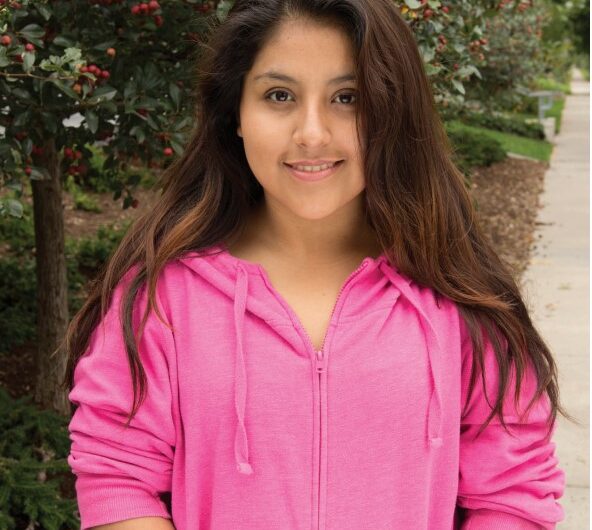
Unit 2: Resistance and Resilience: Art as Tool of Resistance
Time Frame
- 1–2 class periods
Materials
- Green Card Entrepreneur Voices – Dario Meija’s story
- Slides
Connections to the 7 Cs of Ethnic Studies
- Center: centering knowledge from community, elders, families and lived experiences.
- Connect: learn about Mexican and Latino resistance movements locally and globally, historically and today
Instruction
Day 1 – Ignite: Intro/Warm-Up
Welcome, agenda, announcements, learning target (slide 1)
a. Warm-Up Question: When was a time you overcame a fear or hardship?
i. Write in a notebook! (2-3 minutes)
ii. Turn to a neighbor and share (2-4 minutes)
iii. Share out to the class; pick a few students to share (2-3 minutes)
b. Mental health: Today’s lesson discusses racism and experiences of exclusion within Latine communities. Some may personally connect to these experiences in different ways. Please take care of yourself; participate in ways that feel comfortable and respectful.
Chunk: Resistance and Resilience—Latinos Are NOT a Monolith
c. Vocabulary (slide 2)
i. Vocabulary: Monolithic Thinking (slide 2) (source)
-
-
-
- “the tendency to view cultures, experiences, and people from a single perspective”
- Oftentimes, people believe that all Latino/a/x people have the same culture, experiences, traditions or beliefs. But from country to country, and even within countries, Latino/a/x people are so different!
-
-
d. Example: Latino/a/x are not a monolithic group, even within one country!
i. Slide 3: Afro-Latinos: people with descendants from Africa (source)
-
-
- Watch: https://www.youtube.com/watch?v=1XmfL62xozI
- As students watch, have them think/answer: What is something that Black Mexican people want non-Black Mexican people to know?
- Pick 2 people to share with the class.
-
ii. Slide 4: Indigenous people: native peoples to the land prior to European colonization
-
-
- Watch: https://www.youtube.com/watch?v=tQ9Uwq5kXY8
- As students watch, have them think/answer: What is something that indigenous people in Mexico are fighting for?
- Pick two people to share with the class.
-
iii. Puerto Rico is technically a US territory, but its rich cultural history makes it distinct from the rest of the United States.
-
-
- Ask students: Let’s make a list of things you think of when you think of Puerto Rico. (Have students shout out their answers and write a list on the board; Bad Bunny is likely to appear on this list.)
- There may be lots of buzz around these ideas, but for many years, Puerto Rico has wanted to establish independence from the US—all the way back to the early 1900s.
- Today, even stars like Bad Bunny are calling attention to the ongoing issues that Puerto Rico faces, like environmental disasters due to climate change and the economic/social inequalities people face there, despite being a part of the “exceptional” US.
a. Play Bad Bunny’s “El Apagon – Aqui Vive Gente.” (Disclaimer: It does have swearing in Spanish, and maybe some explicit dancing. Watch to see what scenes are most appropriate for students prior to showing it.)
-
iv. Slide 5: Art as a form of resistance and resilience
1. Places all around Latin America have different movements of resistance and resilience.
a. Ask students: How did Bad Bunny use art to call attention to what happens in Puerto Rico? (This could be your exit ticket, after which you continue with the next part tomorrow.)
2. Dance, music, attire, culinary arts, and more!
v. Recap: Latino/a/x are not a monolithic group, even within one country!
1. Even within Mexico, people come from all sorts of different racial and even cultural backgrounds. (Break text, new paragraph/line.) Now imagine we expand this map by thousands of more miles! (Insert map of Central and South America, including islands in Caribbean.)
Day 2 – Chew: Resistance and Resilience in Our Identities and Intersectionality (slide 6)
e. Class work time instructions
i. “So what happens when you have many identities—what do we do to honor all of them?” (slide 6 still)
f. Slide 7: Part 1: Pick a partner
i. Read the story of Dario Meija (have them printed).
ii. Annotate Dario’s story.
-
-
-
- Circle words you do not know.
- Highlight sections where Dario shares parts of his story that were hard/difficult for either him or his family.
- Underline sections where Dario shares parts of his story that honor his identities or bring him joy.
- Star sections that demonstrate identities (gender, culture, language, race, etc.).
-
-
g. Slide 8: Part 2: Add a pair to your pair!
i. Share your annotations and discuss reflection questions together.
ii. Partner Discussion Questions (record or walk around during this)
-
-
- Pick an annotation that stuck out to you—why did it impact you?
- What are some ways Dario finds joy in his Ecuadorian identity?
- How does Dario’s cultural and racial identity impact his work?
- Why does Dario share his story?
- In what ways does Dario demonstrate resilience?
-
Review: Large group whipshare discussion (can be expanded if time allows) (slide 9)
iii. What can resistance and resilience look like?
Resource List
- Contextual resources for further learning on topics of colonization in Latin America https://latino.si.edu/learn/latino-history-and-culture/latino-history/early-latino-history https://timemaps.com/civilizations/latin-america-the-colonial-era/
- Contextual resources for further learning on the Spanish Caste system www.indigenousmexico.org/articles/understanding-the-mexican-casta-system-a-historical-and-cultural-perspective
- Contextual resources for further learning on anti-Blackness in Latin America https://bookshop.org/p/books/racial-innocence-unmasking-latino-anti-black-bias-and-the-struggle-for-equality-tanya-kater-hern-ndez/8232518903b7c4be?ean=9780807020135&next=t&, https://www.abfe.org/blog/confronting-colorism-and-anti-blackness-latinx-community
- Contextual resources for indigenous erasure in Latin America www.oah.org/process/arena-indigenous-caribbean www.researchgate.net/publication/393269447_Latin_American_Mestizaje_A_Tool_to_Erase_the_Indigenous
- “Diversity Matters: Dismantling Monolithic Thinking to Create an Inclusive Work Environment” www.culture-principles.com/diversity-matters-dismantling-monolithic-thinking-to-create-an-inclusive-work-environment
- “Resistencia Afroamericana: La Historia de Yanga” www.youtube.com/watch?v=FIqLzOtzFp4
- Further learning for capoeira, a Brazilian martial art/dance form www.upr.org/arts-and-culture/2016-08-30/roots-of-brazil-the-martial-art-form-capoeira-is-preserving-history-and-tradition
- Further learning for mole https://laroussecocina.mx/palabra/mole www.gob.mx/inpi/articulos/conoce-la-maravillosa-historia-del-mole
- “Colombia: Top Local Music That Reflects the South American Country’s Culture and Tradition” www.latinpost.com/articles/154478/20220315/colombia-top-local-music-reflects-south-american-culture-tradition.htm
- Liberated Ethnic Studies Model Curriculum Values and Principles (7 Cs) https://drive.google.com/file/d/1cGOs7rsY9wT2qI-yIQh5dye8snRjGYxr/view
Unit 1 Identity and Language: Identity Through Stories
Time Frame
- 1–2 class periods
Materials
- Green Card Youth Voices: Immigration Stories from a Minneapolis High School – Alexandra Irrazabal’s story and video
- Slides
Connections to the 7 Cs of Ethnic Studies
- Cultivate: learning about how Mexican and Latino history, people, and language provide opportunities for identity affirmation and healing
- Celebrate: using Mexican and Latino counter-stories and community narratives through storytelling
Instruction (ICCR)
Day 1 – Ignite: Intro/Warm-Up
Welcome, agenda, announcements, learning target (slide 1)
a. Warm-Up Question: When was the last time you were told a story? What was the story about?
i. Write in a notebook! (2-3 minutes)
ii. Turn to a neighbor and share (2-4 minutes)
iii. Share out to the class; pick a few students to share (2-3 minutes)
Chunk: Understanding Stories
b. Stories as a sense of self + the world around us (slide 2)
i. “To know the past is to know the present. To know the present is to know yourself.” —Jason Reynolds + Ibram X. Kendi (Stamped)
ii. Mental health disclaimer/advisory: “Today’s lesson discusses migration, hardship, identity and experiences from non-dominant communities. Some students may personally connect to these experiences in different ways. Please take care of yourself; participate in ways that feel comfortable.”
c. Vocabulary + examples of stories (slide 3)
i. Vocabulary: Stories
-
-
- What is your definition of a story? Write it down! (Give students 2 minutes to think and write.)
- Definition: an account of past events in someone’s life or in the evolution of something.
a. Does your definition match up with the definition on the board? (Call on some students to share.) - Let’s make a definition together. (Find commonalities within the definitions and come up with a definition as a class; use that for their notes, if taking.)
-
ii. Vocabulary: Oral Storytelling (slide 4, same header as “b”)
-
-
-
- the collection and study of historical information using sound recordings of interviews with people having personal knowledge of past events
a. What do you think makes this different from written stories? (Have students share with a partner, then walk around the room asking groups to share with you. Return to front of class and share what you heard + any additional input. Also a good time to share something a shyer, quieter student said and give them their flowers.)
- the collection and study of historical information using sound recordings of interviews with people having personal knowledge of past events
-
-
d. Keeping stories and language alive: Dichos (source 1, source 2, source 3) y corridos (slide 5)
i. Dichos have been used in Mexican and Latino communities for centuries.
-
-
- They provide a form of expression or advice for all kinds of situations
- Example: “el que se lo guarda para alrato, se lo come el gato.” → translates to: If you save it for later, there’s no guarantee it’ll be there.”
- Ask students to shout out “sayings” used in their families (not on slide).
a. If time allows, research some common dichos or sayings and post them around the room. Students can have a gallery walk, noting some of the sayings or dichos their families might use. Create a table on a graphic organizer or model drawing one out for students with one saying they’ve heard before, one they’ve never seen, and one they found interesting.
-
ii. Slide 5: w/ evidence of study (source 1) (ask student to read aloud for class)
-
-
- The sharing of stories and narratives, dichos (sayings) and consejos (advice) is a prominent experience among families in Mexico as well as among immigrant Mexican families in the United States. An opportunity for entertainment and enjoyment, the retelling of family stories and folktales also serves to build family bonds, share cultural values, and construct identity. The sharing of narratives, particularly narratives of poverty and struggle, is associated with resiliency and empowerment, serving to support parents in their interactions with school and advocacy for their children (Delgado-Gaitan, 2005).
-
iii. Slide 6: Corridos defined
-
-
- a ballad in a traditional Mexican style, typically having lyrics that narrate a historical event.
a. Ask students: Can you think of a song that means something to you or resonates with how you feel or think?
i. Ask students to share out. - Slide 7: Corridos have been used since the Mexican Revolution, and regained popularity during the colonization of what is now the Mexican-American border (source 1) and additional southern US lands.
- Corridos were mostly a male-dominated genre, but women have since created subgenres of their own, such as coquette corridos.
a. For deeper diving or more time: check out Belinda’s music in “300 Noches” or “Cactus” or even Eydrey’s “X Ti” (both singers talk about women’s perspectives in relationships, gender, and feminist themes.)
- a ballad in a traditional Mexican style, typically having lyrics that narrate a historical event.
-
iv. Slide 8: Popular corridos then and now
-
-
-
- (missing image) The legend and life of Gregorio Cortez, who bravely fought against American Texas Rangers for the independence of Mexico and Mexican peoples. (source to listen to)
- Slide 9: “La Jaula de Oro” by Los Tigres del Norte (source to video)
a. Explains that the “American” dream is not what it seems, and one ends up feeling more and more isolated from their culture and people while living in America.
-
-
e. Review: “To know the past is to know the present. To know the present is to know yourself.” (slide 10)
i. Latin American countries and people of all identities, backgrounds, and perspectives have been telling their stories for centuries through dichos, consejos, corridos, and more.
ii. Sometimes these stories show us hardship, but they can also show us resilience.
iii. As a dicho says: “No hay mal que por bien no venga” → “Good can always come out of bad/hard/difficult things.”
iv. Close out: What resonated with you the most today? (Feel free to do an exit ticket, pair/share, or even a whipshare large group discussion.)
Day 2 – Chew: How Can Stories Teach Us About Ourselves and the World Around Us? (slide 11)
f. Review concepts from yesterday: “To know the past is to know the present. To know the present is to know yourself.”
i. Latin American countries and people of all identities, backgrounds, and perspectives have been telling their stories for centuries through dichos, consejos, corridos, and more.
ii. Sometimes these stories show us hardship, but it can also show us resilience.
iii. As a dicho says: “No hay mal que por bien no venga” → “Good can always come out of bad/hard/difficult things.”
iv. Warm-up: What stories did you share with your family or friends between yesterday and today?
g. Class work time: instructions for students > “Today you will learn a story about a girl and the perspective and stories she carries with her.”
i. On your own, read + annotate the GCV story of Alexandra Irrazabal.
ii. Circle words you do not know.
iii. Underline phrases that describe who Alexandra is—what she enjoys, her favorite things, etc.
iv. Highlight words/phrases that demonstrate the world around Alexandra.
Review: With a partner, share your annotations + work on reflection questions together
v. Partner Discussion Questions (record or walk around during this)
-
- Describe Alexandra or the world she experienced as you read her story.
- What do all the forms of storytelling today share?
- In what ways do all the forms of storytelling differ?
- Why is it important to hear stories or worldviews like Alexandra’s?
- What can people learn from listening to various forms of storytelling?
Optional: Homework
- Students will be assigned to record an oral history and jot notes as the story is told.
i. The story is about the first time their parents or guardian met them. Students will interview parents or guardians about the first time they met (birth, adoption, etc.).
a. Questions:
-
-
- What was it like leading up to the “meet-up”?
- What was the weather like?
- How were you feeling?
- What was I like?
- And more! There are so many other questions to further deepen understanding, and these can be specific to the course, context, or even school community.
-
Resource List
- “Dichos, Nuggets of Wisdom” www.texasstandard.org/stories/dichos-nuggets-of-wisdom
- “Dichos y Refranes: A Saying For Every Occasion” www.mexperience.com/a-saying-for-every-occasion
- “25 refranes mexicanos que necesitas en tu vida” www.poliglota.org/post/refranes-mexicanos
- “Storytelling in Mexican Homes: Connections Between Oral and Literacy Practices” https://pmc.ncbi.nlm.nih.gov/articles/PMC3614910
- “The Corrido: A Cultural Ballad of the Mexican-American Experience” www.tshaonline.org/handbook/entries/corridos
- “Américo Paredes, a Mexican-American Hero” www.marfapublicradio.org/podcast/rambling-boy/2013-04-29/americo-paredes-a-mexican-american-hero
- “La Jaula de Oro” by Los Tigres del Norte https://www.youtube.com/watch?v=0jeBzqS_6WE
- Liberated Ethnic Studies Model Curriculum Values and Principles (7 Cs) https://drive.google.com/file/d/1cGOs7rsY9wT2qI-yIQh5dye8snRjGYxr/view
Unit 1: Identity and Language – Identity Through Stories
Time Frame
- 1–2 class periods
Materials
- Chromebooks
- Slides
- Green Card Youth Voices: Immigration Stories from a Minneapolis High School – Alexandra Irrazabal’s story and video
- Highlighters
- Pen/Pencils
- Posters / Wall Sticky Notes
- Markers
Connections to the 7 Cs of Ethnic Studies
- Celebrate: and honor Native People/s of the land and Communities of Color by providing a space to share their stories of struggle and resistance, along with their intellectual and cultural wealth
- Center: and place high value on pre-colonial, ancestral, indigenous, diasporic, familial, and marginalized knowledge
Instruction (ICCR)
Day 1 – Ignite: Intro/Warm-Up
Welcome, agenda, announcements, learning target (slide 1)
a. Warm-Up Question: When was the last time you were told a story? What was the story about?
i. Turn to a neighbor and share (2-4 minutes)
ii. Share out to the class; pick a few students to share (2-3 minutes)
Chunk: Understanding Stories
b. Stories as a sense of self + the world around us (slide 2)
i. “To know the past is to know the present. To know the present is to know yourself.” —Jason Reynolds + Ibram X. Kendi (Stamped)
ii. Mental health disclaimer/advisory: “Today’s lesson discusses migration, hardship, identity and experiences from non-dominant communities. Some students may personally connect to these experiences in different ways. Please take care of yourself; participate in ways that feel comfortable.”
c. Vocabulary + examples of stories (slide 3)
i. Vocabulary: Oral Storytelling
-
-
- What is your definition of oral storytelling? Write down what you think the phrase means! (Give students two minutes to think and write.)
a. Does your definition match up with the definition on the board? (Call on some students to read the definition and then others to share.) - Definition: the collection and study of historical information using sound recordings of interviews with people having personal knowledge of past events
- Let’s make a definition together. (Find commonalities within the definitions and come up with a definition as a class; use that for their notes, if taking.)
- What is your definition of oral storytelling? Write down what you think the phrase means! (Give students two minutes to think and write.)
-
d. Keeping stories and language alive: Dichos y corridos (slide 4)
i. Dichos have been used in Mexican and Latino communities for centuries.
-
-
- They provide a form of expression or advice for all kinds of situations
- Example: “El que se lo guarda para alrato, se lo come el gato.” → translates to: “If you save it for later, there’s no guarantee it’ll be there.”
- Ask students to shout out “sayings” used in their families (not on slide).
- Make a list of all the dichos/sayings → What “themes” do you notice, or what kind of advice do they share? Could we group them into those themes or types of advice?
-
ii. Slide 5: w/ evidence of study (ask student to read aloud for class)
-
- The sharing of stories and narratives, dichos (sayings) and consejos (advice) is a prominent experience among families in Mexico as well as among immigrant Mexican families in the United States. An opportunity for entertainment and enjoyment, the retelling of family stories and folktales also serves to build family bonds, share cultural values, and construct identity. The sharing of narratives, particularly narratives of poverty and struggle, is associated with resiliency and empowerment, serving to support parents in their interactions with school and advocacy for their children (Delgado-Gaitan, 2005).
iii. Slide 6: Corridos defined
-
- a ballad in a traditional Mexican style, typically having lyrics that narrate a historical event.
- Slide 7: Corridos have been used since the Mexican Revolution, and regained popularity during the colonization of what is now the Mexican-American border and additional southern US lands.
- Corridos were mostly a male-dominated genre, but women have since created subgenres of their own, such as coquette corridos.
- Check out or add artist Belinda’s song “300 Noches” or “Cactus,” or even Eydrey’s “X Ti” (both singers talk about women’s perspectives in relationships, gender, and feminist themes).
a. Write down what you notice from the beat, melody, and even undertones in the sound. Think about what comes across as “feminine.” Next you’ll compare it to “traditional” corridos made by men.
iv. Slide 8: Popular corridos then and now
-
- The legend and life of Gregorio Cortez, who bravely fought against American Texas Rangers for the independence of Mexico and Mexican peoples.
- Slide 9: “La Jaula de Oro” by Los Tigres del Norte
a. Explains that the “American” dream is not what it seems, and one ends up feeling more and more isolated from their culture and people while living in America. - Ask students: What do these corridos have in common with the music from the women artists? What is different about them? Why is it important to have all types of storytellers tell stories through music like corridos?
v. Student quick work: Ask students to find a song that tells a story about a population of people.
-
- Instructions (slide 10):
a. Open Chromebooks.
b. Find a popular contemporary song that tells a story about a population of people, or tells a historical story (add a six-minute timer).
- Instructions (slide 10):
e. Review: “To know the past is to know the present. To know the present is to know yourself.” (slide 11)
-
- “Latin American countries have been telling their stories for centuries through dichos, consejos, corridos and more.
- Sometimes these stories show us hardship, but it can also show us resilience
- As a dicho says: “No hay mal que por bien no venga” → Good can always come out of bad/hard/difficult”
Day 2 – Chew: How can stories teach us about ourselves and the world around us? (slide 12)
f. Class work time: instructions for students
-
- On your own, read + annotate the GCV story of Alexandra Irrazabal.
- Circle words you do not know.
- Underline phrases that describe who Alexandra is—what she enjoys, her favorite things, etc.
- Highlight words/phrases that demonstrate the world around Alexandra.
g. Poster gallery: Instructions
-
- Write one of the questions below on each poster.
- Groups of three to six students spend 5 minutes on each poster.
- They can add to other’s thoughts, ask questions about other’s thoughts, add their own answer to the question posted, etc.
- Student groups present their poster once full rotation is done, sharing what’s been written.
- Gallery questions
-
- Why is it important to share stories of experience?
- What do all the stories heard or read today have in common?
- How do stories shape the way we think?
- Why is it important to highlight stories from non-dominant communities?
- Why is it important to acknowledge different forms of storytelling?
- What do we learn from stories?
Review (Exit Ticket)
- How did today’s lesson deepen your understanding of storytelling?
- If you could tell a story about your community, what would it be?
Multilingual and ELL Supports
- Allow students to read Alexandra’s story in home language
- Allow students to annotate in home language
- Groups can be home language groups or mixed language groups
- Provide English sentence stems to help students contribute to the conversation during the poster gallery activity
- Allow students to think about their answers by writing it in their home language first prior to gathering in a group
Vocabulary and Definitions
- Oral storytelling: the practice of passing down history, values, and traditions through spoken words and performance rather than writing
- Dichos: short, popular sayings or proverbs in Spanish-speaking cultures that offer folk wisdom or life lessons
- Corridos: traditional Mexican narrative songs or ballads that tell stories of history, social issues, or the lives of everyday heroes
- Consejos: helpful pieces of advice or cultural wisdom shared by elders to guide younger generations in making good choices
- Narratives: the specific stories or accounts of events that help people explain their experiences and how they see the world
- Non-dominant communities: groups of people who have historically had less social, political, or economic power compared to the largest or most influential group in a society
Resource List
- “Dichos, Nuggets of Wisdom” www.texasstandard.org/stories/dichos-nuggets-of-wisdom
- “Dichos y Refranes: A Saying For Every Occasion” www.mexperience.com/a-saying-for-every-occasion
- “25 refranes mexicanos que necesitas en tu vida” www.poliglota.org/post/refranes-mexicanos
- “Storytelling in Mexican Homes: Connections Between Oral and Literacy Practices” https://pmc.ncbi.nlm.nih.gov/articles/PMC3614910
- “The Corrido: A Cultural Ballad of the Mexican-American Experience” www.tshaonline.org/handbook/entries/corridos
- “Américo Paredes, a Mexican-American Hero” www.marfapublicradio.org/podcast/rambling-boy/2013-04-29/americo-paredes-a-mexican-american-hero
- “La Jaula de Oro” by Los Tigres del Norte www.youtube.com/watch?v=0jeBzqS_6WE
- “Storytelling and Cultural Traditions” https://education.nationalgeographic.org/resource/storytelling-and-cultural-traditions
- “Dichos/Sayings” https://usldhrecovery.uh.edu/exhibits/show/the-ramona-gonzalez-papers/dichos
- “Corridos: Stories Told Through Song” https://www.nps.gov/articles/corridos-stories-told-through-song.htm
- Dictionary definition, “narrative” https://dictionary.cambridge.org/us/dictionary/english/narrative
- Liberated Ethnic Studies Model Curriculum Values and Principles (7 Cs) https://drive.google.com/file/d/1cGOs7rsY9wT2qI-yIQh5dye8snRjGYxr/view
Unit 3: Healing and Future Building – Hmong Healing and Future Building
Time Frame
-
2 class periods
Materials
Connections to the 7 Cs of Ethnic Studies
-
Cultivate: using traditional Hmong arts as an opportunity for identity affirmation and healing
-
Conceptualize: using Hmong arts as a tool for visioning, futurisms, world-building, hope, healing, and collective possibilities
Instructions
Important: Please give the class a general trauma warning and create a safe space for the class before beginning the lesson. Today’s class will explore how people use art and music to process hard times and heal. Some of our topics will touch on war, leaving home, and intergenerational trauma, the stress or sadness that families carry across generations, and may trigger certain feelings. Please remind students to be respectful of one another, provide space as needed, and allow students to skip or pass on discussions as needed. Also, remind students to reach out to their mental health providers and tell them these topics were brought up and discussed in class, and made students feel a certain way. Use your best professional judgment to warn the class.
Ignite: Sound Challenge
-
Play a short sound clip of either the qeej or the raj without showing the instrument (instrument slide).
-
Ask the class: If this sound were a person talking, what emotions might they be feeling?
-
Sentence Starter: The sound feels . . .
-
-
Show an image of the instrument. Explain to the class what this instrument is.
Turn and Talk
What song do you listen to when you are sad or down? Why does music work better than just talking to a friend?
Chunk: Hmong Musical Instruments
-
Watch an excerpt of Among Mountains, from 29:00 to 43:00.
-
Neng Thao explains the instruments and their connections to the Hmong language, along with how music is an extension of the language and is often used for courting.
-
Explain how the instruments mimic the tones of words when they are played. The sounds are like singing a message to express one’s feelings, singing to a friend, or singing to one’s ancestors. Have students try to hum the tone of their own name.
-
Clearly explain to students how music allows for expression, especially feelings. Traditionally, it is a cultural taboo to openly talk and share feelings and emotions, especially while courting. Music allows individuals to express their feelings of love, happiness, or sadness to one another.
Turn and Talk
Think about a song you put on when you are down. Why does hearing this song feel safer or more comforting than talking with a friend?
-
Sentence Starter: When I am overwhelmed, I like to listen to . . .
Chunk: Steve Thao
Watch the “Steve Thao” video from Green Card Entrepreneur Voices.
Group Task
-
Watch: Watch the video together.
-
Discuss: How did art help Hmong to express their feelings? How can art help Hmong understand their family’s history? How can art help Hmong heal from their past?
-
Analyze: Thao said, “Art is a way for us to tell our own stories, rather than having others tell them for us.” What does he mean by this? How can you use art to tell your story?
-
How do you express your feelings?
-
How can you use art to express your feelings?
-
Chew: Paj Ntaub Artwork
Introduce traditional Hmong paj ntaub, which is often used to tell stories, especially through story cloths. Share how story cloths started in the refugee camps as a way for Hmong to use their talent to make money. They would make cloth by hand and create story cloths of their journey, history, and experiences. Show examples of story cloths and point out specific symbols and what they represent. (See Flowery Cloth link below.)
Mini-Story Cloth Assignment
Create a three-panel story cloth template.
-
Template design: three squares side by side by side, with a border consisting of Hmong symbols (mountains and/or snails)
-
Students will draw in each square.
-
Square 1: Draw an image of a challenge you faced.
-
Square 2: Draw something that helped you to feel better or heal (family, music, art, etc.).
-
Square 3: Draw your future hopes for yourself.
-
-
-
Students will also write three sentences about their images, one for each square.
-
My art shows _________.
-
It helps me feel ______ because _____.
-
__________ gives me hope for the future.
-
Review: 3-2-1 Exit Ticket
On a slip of paper (regular notebook paper or sticky notes) or a digital form, students must write and turn in:
-
Three things they learned today
-
Two symbols that can be found on a Hmong story cloth
-
One way art can help heal
Multilingual and ELL Support
-
Provide a sentence stem for reflection:
-
Art can serve to help with . . .
-
Art can help heal . . .
-
Art allows me to understand…
-
I express myself by . . .
-
When I feel _______, I listen to . . .
-
Vocabulary and Definitions
-
Paj ntaub: traditional Hmong art that is made by a needle stitching onto a fabric cloth
-
Art: something you make using imagination to share ideas and feelings, to make something beautiful, or to show and tell how you see the world
-
Healing: the process of getting better, stronger, or whole again after you have been hurt, in either your body or feelings
-
Hope: the belief that something good can happen
-
Symbol: a picture that stands for a big idea
Resource List
-
Hmong Instruments www.learnabouthmong.org/default_active_page_id=31.html
-
Paj Ntaub https://learnuake.org/articles/hmong-culture/embroidery/
-
Flowery Cloth https://drive.google.com/file/d/1xbPy-QN1b9Oq90H28k_mWvihBg3xabvG/view
-
Among Mountains video www.youtube.com/watch?v=VpT5bHrezxE
-
Green Card Entrepreneur Voices – Steve Thao’s video
-
Liberated Ethnic Studies Model Curriculum Values and Principles (7 Cs) https://drive.google.com/file/d/1cGOs7rsY9wT2qI-yIQh5dye8snRjGYxr/view
-
“Birdsong: the dying whistled language of Hmong in northern Laos” video – www.youtube.com/watch?v=_KIYwCieaMs
3 Kawm Txog: Kev Kho Siab Ntsws thiab Txhim Kho Lub Neej Tom Ntej – Hmoob Kev Kho Siab Ntsws thiab Txhim Kho Lub Neej Tom Ntej
Sij Hawm Qhia
- 1–2 hnub thaum chav kawm sib ntsib
Cov Khoom Siv
Connections to the 7 Cs of Ethnic Studies
- Saib Xyuas: siv Hmoob cov txuj ci (suab paj nruag/paj ntaub) los ua lub cib fim kom lees paub tus kheej thiab kho siab ntsws
- Conceptualize: siv Hmoob cov txuj ci (suab paj nruag/paj ntaub) los yog ib yam cuab yeej kom muaj zeem muag, pom yav tom ntej, tsim kho lub ntiaj teb, muaj kev cia siab, muaj kev kho siab ntsws, thiab muaj kev sib raug zoo ua ke
Txheej Txheem Qhia
Tseem Ceeb: Thov ceeb toom cov tub ntxhais tias kev kawm hnub no yuav muaj qee yam ua rau lawv txhawj/ muaj kev nyuaj siab, thiab tsim ib chav nyab xeeb rau lawv ua ntej pib zaj kawm no. Hnub no, chav kawm yuav saib tib neeg cov txuj ci paj ntaub thiab suab paj nruag los ua kev kawm kom nkag siab cov sij haum nyuab thiab nkag siab tias cov txuj ci no kho neeg siab ntsws li cas. Qee yam ncauj lus peb yuav tham txog yog kev ua tsov rog, tsiv teb tsaws chaw/khiav tawm teb chaws, thiab kev tsim txom ntawm ntau tiam neeg, kev ntxhov siab los sis tusiab uas cov tsev neeg muaj ib phaum dhau ib phaum, thiab tej zaum yuav ua rau yus muaj qee yam kev xav.
Thov ceeb toom cov tub ntxhais kom paub sib hwm, tsim ib chav nyab xeeb rau txhua tus, thiab yog lawv tsis xav hais lus/tsis xav tham los tau. Ntxiv thiab, nco ntsoov kom cov tub ntxhais mus cuag lawv cov kws kho kev mob hlwb yog lawv xav tau kev pab, thiab qhia tias cov ncauj lus hnub no yog tham hauv chav kawm es ua rau lawv muaj qee yam kev xav. Xib Fwb siv nws qhov kev txiav txim siab zoo tshaj plaws los ceeb toom cov tub ntxhais kawm.
Taw: Lub Suab Txawv
-
Tso lub suab qeej los si raj me me rau cov tub ntxhais mloog, txhob tso daim duab kom pom cov twj suab paj nruag (instrument slide).
-
Nug cov tub ntxhais: Yog tias lub suab no yog ib tug neeg hais lus, xav seb nws lub siab xav li cas?
-
Kab lub pib: Lub suab no __________. / Hnov tau tias lub suab no ________________.
-
-
Tso daim duab ntawm tus qeej/rab raj. Qhia cov tub ntxhais tias yog dab tsi.
Tig thiab Tham
Koj mloog zaj nkauj dab tsi thaum koj tu siab los sis tsis muaj siab ua dab tsi? Vim li cas mloog nkauj ho zoo dua nrog ib tug phooj ywg tham?
Phua: Hmoob Twj Suab Paj Nruag
- Saib ib ntu luv luv ntawm Among Mountains, thaum 29:00 txog 43:00.
- Neeb Thoj piav qhia cov twj suab paj nruag thiab cov suab uas txhais tau lus Hmoob, nrog rau tias suab paj nruag/nkauj yog ib yam txuas neeg cov lus hais, thiab feem ntau yog sib los nrhiav txij nkawm/sib tham.
- Piav qhia cov suab ntawm cov twj suab paj nruag qog lus Hmoob li cas. Cov suab zoo yam li hu ib zaj lus nthuav qhia ib tug neeg txoj kev xav, zoo li hu nkauj rau ib tug phooj ywj los sis hu nkauj rau yus cov poj koob yawm txwv. Hais kom cov tub ntxhais sim seev (hum) lawv lub npe.
- Qhia rau cov tub ntxhais kawm kom meej tias suab paj nruag yog ib yam ua rau neeg qhia tau lawv tej kev xav. Thaum ub, Hmoob tsis qhib siab qhia txhua yam kev xav lawv muaj, tshwj xeeb yog thaum sib tham nrhiav txij nkawm. Suab paj nruag yog ib txoj hauv kev rau tib neeg qhib siab qhia thiab tham txog lawv tej kev xav, kev hlub, kev zoo siab, los sis kev tu siab rau lwm tus.
Tig thiab Tham
Xav txog ib zaj nkauj koj tso mloog thaum uas koj tu siab/ tsis muaj siab ua dab tsi. Vim li cas hnov zaj nkauj ntawd thiaj li muaj kev nyab xeeb rau koj los sis nplij koj siab dua li tham nrog ib tug phooj ywg?
- Kab lus pib: Thaum kuv nyuaj siab, kuv nyiam mloog ___________.
Phua: Steve Thoj
Saib daim yeeb yaj kiab txog “Steve Thao” los ntawm Green Card Entrepreneur Voices.
Pab Pawg Sib Tham/Sib Qhia Tswv Yim
- Saib daim yeeb yaj kiab: Saib ua ke.
- Tham: Txuj ci suab paj nruag pab Hmoob qhib siab qhia lawv cov kev xav li cas? Cov txuj ci no pab Hmoob nkag siab lawv tsev neeg li keeb kwm li cas? Cov txuj ci no pab Hmoob kho lub neej yav dhau lo li cas?
- Tshuaj xyuas: Thoj hais tias, “Txuj ci suab paj nruag yog ib txoj hauv kev rau peb qhia peb cov dab neeg, es tsis txhob cia lwm tus qhia rau peb.” Qhov nws hais no txhais tau li cas? Koj yuav siv txuj ci suab paj nruag los qhia koj zaj dab neeg li cas?
- Koj qhia koj cov kev xav li cas?
- Koj yuav siv txuj ci suab paj nruag lo qhia koj cov kev xav li cas?
Zom: Paj Ntaub Artwork
Nthuav qhia txog paj ntaub Hmoob, uas feem ntau yog siv los qhia dab neeg, tshwj xeeb li daim paj ntaub dab neeg. Qhia rau cov tub ntxhais tias paj ntaub dab neeg pib hauv cov yeej thoj nam tawg rog, uas yog ib txoj hauv kev cov Hmoob nthuav lawv cov txuj los khwv nyiaj. Lawv siv tes dag zog los tsim daim ntaub, ces siv tes los kos thiab xaws daim paj ntaub dab neeg qhia txog lawv lub neej, keeb kwm, thiab tej yam lawv tau ntsib. Muab ob peb daim paj ntaub dab neeg rau cov tub ntxhais kawm saib, thiab qhia cov qauv tshwj xeeb npe thiab txhais li cas. (Saib daim paj ntaub link hauv qab.)
Zaj Dab Neeg Luv Luv
Tsim ib daim ntawv paj ntaub 3 seem
- Daim Ntawv Paj Ntaub 3 seem design: 3 lub xwm fab xwm meem sib txuas, uas muaj ntug qauv Hmoob (roob/ qwj) ncig tag nrho 3 lub ntsais
- Cov tub ntxhais yuav kos duab rau txhua lub ntsais
- Xwm fab xwm meem 1: Kos duab qhia ib lub sij hawm nyuaj koj tau ntsib los
- Xwm fab xwm meem 2: Kos duab qhia seb dab tsi tau pab kom koj zoo siab/ nplij koj siab/ kho tau koj siab (tsev neeg, suab paj nraug, kos duab, lwm yam).
- Xwm fab xwm meem 3: Kos duab qhia koj cov kev cia siab koj muaj rau koj tus kheej yav tom ntej
- Cov tub ntxhais yuav kos duab rau txhua lub ntsais
- Cov tub ntxhais yuav sau peb kab lus txog lawv cov duab, ib kab lus hauv ib lub ntsais.
- Kuv daim duab qhia _________.
- No pab kuv (hnov tias) ______ vim _____.
- __________ ua rau kuv muaj kev cia siab rau yav tom ntej. .
Saib Dua: 3-2-1 Daim Pib Tawm
Siv ib daim ntawv (nyob hauv phau ntawv sau los sis ib daim ntawv me me) los sis saum huab cua, hais kom cov tub ntxhais sau teb cov lus no thiab muab rau tus xib fwb:
- Peb yam koj kawm tau hnub no
- Ob tug qauv uas muaj nyob hauv paj ntaub Hmoob
- Ib txoj hauv kev uas suab paj nruag/ paj ntaub pab tau neeg kev kho siab ko ntsws
Kev Pab Cov Tub Ntxhais Hais Ntau Hom Lus thiab Kawm Lus Askiv
- Siv cov kab lus pib thaum rov xav txog/tham txog kev kawm:
- Txuj ci suab paj nruag/ paj ntaub pab peb tau nrog _____
- Txuj ci suab paj nruag/ paj ntaub pab kho _______
- Txuj ci suab paj nruag/ paj ntaub ua rau kuv nkag siab ______.
- Kuv qhia kuv cov kev xav/ kuv tus kheej los ntawm ______.
- Thaum kuv _____, kuv mloog _____.
Ntsiab Lus thiab Txhais Li Cas
- Paj ntaub: Hmoob txuj ci teej tug uas siv koob los xaws rau daim ntaub
- Txuj Ci (suab paj nruag/paj ntaub/ kev kos duab): tej yam yus tsim los ntawm kev xav los qhia tswv yim thiab neeg cov kev xav, los tsim tej yam zoo nkauj, los sis los qhia tias yus pom lub ntiaj tej li cas
- Kev kho siab ntsws: qhov txheej txheem ntawm kev ua rau yus lub siab nkaj, siab tawv, los sis lub siab rov los ua ib lub tom qab yus raug tsim txom, tsis hais ntawm cev nqaij daim tawv los sis kev xav hauv siab
- Kev cia siab: kev ntseeg tias yam zoo yeej yuav tshwm sim
- Tus qauv: ib daim duab uas txhais tau ib lub tswv yim loj/tseem ceeb, los sis txhais tau ib qho ntsiab lus zoo
Teev Cov Khoom Siv
- Twj suab paj nruag Hmoob www.learnabouthmong.org/default_active_page_id=31.html
- Paj Ntaub https://learnuake.org/articles/hmong-culture/embroidery/
- Daim ntaub muaj qauv paj ntaub https://drive.google.com/file/d/1xbPy-QN1b9Oq90H28k_mWvihBg3xabvG/view
- Among Mountains video www.youtube.com/watch?v=VpT5bHrezxE
- Green Card Entrepreneur Voices – Steve Thoj daim yeeb yaj kiab video
- Liberated Ethnic Studies Model Curriculum Values and Principles (7 Cs) https://drive.google.com/file/d/1cGOs7rsY9wT2qI-yIQh5dye8snRjGYxr/view
- “Birdsong: the dying whistled language of Hmong in northern Laos” video – www.youtube.com/watch?v=_KIYwCieaMs
1 Kawm Txog: Lub Neej thiab Hom Lus – Hmoob Lub Neej thiab Hom Lus
Sij Hawm Qhia
- 1–2 hnub thaum chav kawm sib ntsib
Cov Khoom Siv
- Green Card Youth Voices: Immigration Stories from a St. Paul High School – Ib Yam Xyooj zaj dab neeg story thiab video
- Duab Paj ntaub images – xaiv ib daim
Connections to the 7 Cs of Ethnic Studies
- Saib Xyuas: kawm txog keeb kwm Hmoob, haiv neeg Hmoob, thiab lus Hmoob kom muaj cib fim los lees paub thiab kho tus kheej
- Ua kev zoo siab: using Hmong counter-stories and community narratives through storytelling
Txheej Txheem Qhia
Taw: Hom Lus los sis Duab
Kev Xaiv A: Hom Lus
Sau rau ntawm daim txiag:
Nyob zoo. Kuv lub npe hu ua . . .
(Hello. My name is . . .)
Nug cov tub ntxhais kawm seb puas muaj leej twg paub hom lus no lo sis nyeem tau. Hu ob peb tug los twv los sis nyeem kab lus rau txhua tus. Nug cov tub ntxhais kawm kom tsa tes yog tias lawv hais ib hom lus txawv uas tsis yog lus Askiv tom tsev.
Tig thiab Tham
Piv txwv tias koj tau khiav mus nyob ib lub teb chaws tshiab uas tsis muaj neeg paub hais, nyeem, los sis nkag siab koj hom lus. Koj yuav qhia rau lawv tias koj yog leej twg li cas? Koj yuav qhia koj zaj dab neeg rau lawv li cas?
- Hais kom ob peb tug tub ntxhais kawm qhia lawv cov tswv yim rau sawv daws.
Kev Xaiv B: Duab
Tso ib daim duab paj ntaub qub paj ntaub clothing piece.
Hais kom cov tub ntxhais sib tham seb hom lus los sis cov lus uas cov qauv qhia yog dab tsi. Qhia rau lawv tias cov Hmoob ntseeg tias lawv cov lus thaum qub ub yog muab sau los sis xaws rau ntawm Hmoob cov khaub ncaws thiab paj ntaub ua lus zais ceeb toom lwm tus txog kev phom sij. Tiam sis, dhau ib lub sij hawm los, cov lus hais tau ploj mus tag; txhua yam uas tshuav tam sim no ces yog cov cim thiab cov qauv lawm xwb.
Phua: Kev Piav Dab Neeg
Qhia tias haiv neeg Hmoob yog ib haiv neeg pawg tsawg nyob hauv Suav Teb uas tau khiav tawm mus nyob thoob Sab Qab Teb Chaws Esxias. Meskas CIA tau rub Hmoob los pab tua Kob Tsov Rog Qab Rooj hauv Nplog Teb. Vim li no, coob tus Hmoob yuav tsum tau khiav tawm Nplog Teb mus nyob hauv cov yeej thoj nam tawg rog hauv Thaib Teb. Nim no, Hmoob nyob thoob Asmesliskas; cov coob nyob hauv lub xeev California, Minnesota, thiab Wisconsin. Hmoob nyob coob heev hauv lub ob nroog ntxaib. Hmoob lub neej thiab tus kheej tau hloov pauv vim kev yuav plam lawv hom lus thiab kab lis kev cai.
Piav tias tau ntau tiam, cov Hmoob siv lus los piav dab neeg xwb. Cov Hmoob tsis muaj ntaub ntawv sau tseg txog lawv cov keeb kwm vim raug kev tsim txom los ntawm haiv neeg Suav. Lawv tsiv Suav Teb los mus rau Suav Qab Teb ua ntej tsiv mus Sov Choj/ Sab Qab Teb Chaws Esxias. Thaum lawv khiav ces, lawv tau poob thiab plam lawv cov ntaub ntawv.
Tiam sis, kev piav dab neeg yeej yog lawv ib txoj hauv kev tseem ceeb los qhia Hmoob keeb kwm, kev ntshaw, kev ntseeg, kab lis kev cai, thiab dab neeg. Hmoob muaj peev xwm qhia lawv cov kab lis kev cai thiab keeb kwm los ntawm kev piav dab neeg thiab hais lus. Cov dab neeg qhia txog kev ua neej, ua rau yus pom lub ntiaj ntej, thiab ua rau yus nkag siab tus kheej/lub neej thiab lub zej zog. Kev piav dab neeg kuj yog ib qho tseem ceeb ceev/khaws cov ntaub ntawv ntawm cov poj koob yawm txwv, kev tsiv teb tsaws chaw, thiab lub neej, nrog rau cov nplua rog loj thiab kev tsis sib haum xeeb.
Phua: Ntawv Hmoob Las Tees
- Piav qhia tias ntawv Hmoob Las Tees yog hom ntawv uas Hmoob coob tus siv niaj hnub no. tawv Hmoob Las Tees tsim thaum xyoo 1950s los ntawm ib co Txiv Plig Fab Kis thiab ib co kws Hmoob hauv Nplog Teb: Txiv Plig Nyiaj Pov (Father Yves Bertrais), Dr. Smalley, and Dr. Barney, nrog rau ob peb tug Hmoob nyob hauv zos
Tig thiab Tham
Thaum lwm tus tib neeg txawv teb chaws muaj fwj chim tuaj tsim ntaub ntawv rau yus haiv neeg sau, qhov no muaj feem hloov pauv/cuam tshuam yus tus kheej/ lub neej li cas?
- Nug ob peb tug tub ntxhais kawm qhia lawv cov tswv yim rau sawv daws.
Chunk: Lus Hmoob thiab Cov Cim Suab
- Piav qhia me ntsis tias lus Hmoob yog ib yom lus muaj 8 lub suab cim. Tus tsiaj ntawv kawg ntawm ib lo lus Hmoob tsis muaj suab; nws qhia kom yus hais lo lus siab, qis, tus, los sis npub ntswg. Txhua lo lus Hmoob muaj nws lub ntsiab lus.
- Lus Hmoob feem ntau cov ib lo lus thiab luv luv. Txhua lo lus muaj tsiaj ntawv txiv, tsiaj ntawv niam, thiab cim suab
- Tsiaj ntawv txiv muaj ib mus txog plaub tug/lub suab ua ke. Tsiaj ntawv niam yog ib los sis ob tug ua ke, thiab cov cim suab ces yog ib tug tsiaj ntawv xwb.
Tig thiab Tham
Yog tias ib tug neeg tsis paub nws hom lus, nws yuav ua li cas thiaj li qhia tau nws tej kab lis kev cai los sis keeb kwm?
- Nug ob peb tug tub ntxhais kawm qhia lawv cov tswv yim rau sawv daws.
Zom: Ib Yam Xyooj Zaj Dab Neeg thiab tshuaj xyuas
-
Muab “Ib Yam Xyooj” ib zaj lus luv luv los ntawm Green Card Voices: St. Paul, pib saum toj nploog 3 mus txog nploog 4 (saib hauv qab, pib ntawm thawj nqe lus)
-
Cia cov tub ntxhais nyeem Ib Yam zaj dab neeg nyob hauv Asmesliskas
Pab Pawg Sib Tham/Sib Qhia Tswv Yim
-
Nyeem: Nyeem zaj dab neeg ua ke.
-
Sib tham: Ib yam zaj dab neeg ceev tseg nws tus kheej/lub neej li cas? Nws txuam/txia/ koom tau nrog Meskas kev coj noj coj ua/ kab lis kev cai li cas?
-
Tshuaj xyuas tus kheej/lub neej: Txawm hais tias sau ua lus Askiv xwb los, Ib Yam ceev tseg thiab ua kev zoo siab rau nws tus kheej/lub neej li cas?
Cov Lus Nug Uas Txhawb Kev Sib Tham Hauv Chav Kawm
-
Hauv zaj dab neeg, ib hom lus no yog kev txhawb los sis kev thaiv ib tus neeg hauv kev li cas?
-
Ib Yam qhia tias nws muaj feem koom tau lwm tus thiab thiab lees paub tias nws yog Hmoob li cas?
-
Muab Ib Yam zaj dab neeg los piv koj zaj, dab tsi zoo tib yam thiab dab tsi sib txawv? Peb yuav ua kev zoo siab los sis lees txais peb qhov kev sib txawv li cas?
-
Muaj ntau tshaj 90,000 tus neeg Hmoob nyob hauv Minnesota, koj xav tias vim li cas keeb kwm Hmoob thiaj li tsis muaj feem nyob hauv Meskas cov phau ntawv keeb kwm?
-
Hom lus hais muaj nqis rau Hmoob tus kheej/lub neej li cas? Yog tsis paub lus Hmoob lawm ces yus puas yog ib tug Hmoob tiag tiag? Vim li cas yus tseem yog Hmoob tiag tiag los sis tsis yog lawm?
Saib Dua: 3-2-1 Daim Pib Tawm
Siv ib daim ntawv (nyob hauv phau ntawv sau los sis ib daim ntawv me me) los sis saum huab cua, hais kom cov tub ntxhais sau teb cov lus no thiab muab rau tus xib fwb:
-
Peb yam lawv kawm tau txog keeb kwm Hmoob los sis lus Hmoob
-
Ob qho vim li cas lus thiab kab lis kev cai muaj feem/cuam tshuab rau Hmoob tus kheej/lub neej
-
Ib lo lus nug koj tseem muaj txog kev sib raug/sib tshuam ntawm lus thiab tus kheej/lub neej
Kev Pab Cov Tub Ntxhais Hais Ntau Hom Lus thiab Kawm Lus Askiv
-
Sau cov kab lus qhia pib hais lus thaum muaj kev sib tham
-
Hauv zaj dab neeg, ib hom lus no yog kev txhawb los sis kev thaiv ib tus neeg hauv kev li cas?
-
Lus yog ib qho tshawb yus hauv kev vim …..
-
Lus yog ib qho thaiv yus hauv kev vim …..
-
-
Ib Yam qhia tias nws muaj feem koom tau lwm tus thiab thiab lees paub tias nws yog Hmoob li cas?
-
Ib Yam hnov tau tias nws muaj feem koom tau lwm tus vim/ los ntawm . . .
-
Ib Yam hnov tau tias nws yog nws tus kheej dua vim nws ua tau . . .
-
-
Muab Ib Yam zaj dab neeg los piv koj zaj, dab tsi zoo tib yam thiab dab tsi sib txawv? Peb yuav ua kev zoo siab los sis lees txais peb qhov kev sib txawv li cas?
-
Ib Yam thiab kuv zaj dab neeg zoo tib yam vim . . .
-
Ib Yam thiab kuv zaj dab neeg sib txawv vim . . .
-
Muaj ntau tshaj 90,000 tus neeg Hmoob nyob hauv Minnesota, koj xav tias vim li cas keeb kwm Hmoob thiaj li tsis muaj feem nyob hauv Meskas cov phau ntawv keeb kwm?
-
Kuv xav tias keeb kwm Hmoob tsis nyob hauv Meskas cov phau ntawv vim . . .
-
-
Hom lus hais muaj nqis rau Hmoob tus kheej/lub neej li cas? Yog tsis paub lus Hmoob lawm ces yus puas yog ib tug Hmoob tiag tiag? Vim li cas yus tseem yog Hmoob tiag tiag los sis tsis yog lawm?
-
(Lus) Hmoob tseem ceeb vim . . .
-
Ib leeg tseem yog/ tsis yog Hmoob tiag tiag yog nws tsis paub lus Hmoob vim….
-
Ntsiab Lus thiab Txhais Li Cas
-
Cov neeg tawg rog: cov pab pawg neeg uas tau tsiv teb tsaws chaw deb ntawm lawv lub qub teb chaws mus rau lwm lub
-
Paj ntaub: Hmoob txuj ci teej tug uas siv koob los xaws rau daim ntaub
-
Ntawv Hmoob Las Tees: ib hom kev sau thiab nyeem ntawv Hmoob uas siv tib co tsiaj ntawv li lus Askiv tiam sis lub suab sib txawv
-
Kev piav dab neeg: keeb kwm qhia ib tiam dhau ib tiam los ntawm qhov ncauj, feem ntau yog los ntawm kev piav dab neeg, cov nkauj, los sis kev coj noj coj ua, es tsis yog los ntawm kev nyeem ib phau ntawv.
-
Txuam/txia: txoj kev uas mus koom/coj lwm tus cov kab lis kev cai
Teev Cov Khoom Siv
-
Paj ntaub images – xaiv ib daim
-
Green Card Youth Voices: Immigration Stories from a St. Paul High School – Ib Yam Xyooj zaj dab neeg story thiab video
-
Hmoob kev piav dab neeg yog dab tsi? https://www.mochimag.com/arts-culture/hmong-oral-tradition/
-
Ntawv Hmoob Las Tees yog dab tsi? https://www.hmongrpa.org/
-
Liberated Ethnic Studies Model Curriculum Values and Principles (7 Cs) https://drive.google.com/file/d/1cGOs7rsY9wT2qI-yIQh5dye8snRjGYxr/view
Unidad 1: Identidad y lenguaje – La identidad por medio de las historias
Periodo de tiempo
- 1-2 períodos de clase
Materiales
- Chromebooks
- Diapositivas
- Green Card Youth Voices:: Historias de inmigración de una escuela secundaria de Minneapolis– historia y video de Alexandra Irrazábal
- Resaltadores
- Pluma/Lápices
- Carteles/ Notas adhesivas para la pared
- Marcadores
Conexiones a las 7 C’s de los estudios étnicos
- Celebrar: y honrar a los pueblos indígenas de la tierra y a las comunidades de color proporcionar un espacio para compartir sus historias de lucha y resistencia, junto con su riqueza intelectual y cultural.
- Centrado: y poner gran valor en lo precolonial, lo ancestral, lo indígena, lo diaspórico, lo familiar y en el conocimiento marginado.
Instrucción (ICCR)
Día 1 – Encender: Introducción/Calentamiento
Bienvenida, agenda, anuncios, objetivo de aprendizaje (diapositiva 1)
a. Pregunta de calentamiento: ¿Cuándo fue la última vez que te contaron un cuento? ¿De qué se trataba el cuento?
i. Voltea a un compañero y comparte tu experiencia (2-4 minutos).
ii. Compártelo con la clase; elige a algunos estudiantes (2-3 minutos).
Fragmentar: Entendiendo las historias
b. Las historias como un sentido de sí mismo y del mundo que nos rodea (diapositiva 2)
i. “Conocer el pasado es conocer el presente. Conocer el presente es conocerse a uno mismo.” —Jason Reynolds + Ibram X. Kendi (Sellado)
ii. Aviso/descargo de responsabilidad sobre salud mental: La lección de hoy trata de migración, dificultades, identidad y las experiencias de comunidades no dominantes. Algunos estudiantes pueden identificarse con estas experiencias de diferentes maneras. Por favor, cuídese y participe en la forma que le resulte más cómoda.
c. Vocabulario + ejemplos de historias (diapositiva 3)
i. Vocabulario: Narración oral
- ¿Cuál es tu definición de narración oral? ¡Escribe lo que crees que significa la frase! (Dos minutos para pensar y escribir).
a. ¿Coincide tu definición con la que está en la pizarra? (Pide a algunos alumnos que lean la definición y luego a otros que la compartan). - Definición: la recopilación y el estudio de información histórica por medio de grabaciones de entrevistas con personas que tienen conocimiento personal de eventos en el pasado.
- Vamos a crear una definición juntos. (Busquen puntos en común entre las definiciones y formen una definición en clase; úsela para sus apuntes, si los toman).
d. Manteniendo vivas las historias y el lenguaje: Dichos y corridos (diapositiva 4)
i. Los dichos han sido utilizados en las comunidades mexicanas y latinas durante siglos.
- Proporcionan una forma de expresión o consejo para todo tipo de situaciones.
- Ejemplo: “El que se lo guarda para al rato, se lo come el gato.” → se traduce a: “Si lo guardas para más tarde, no hay garantía de que esté allí.”
- Pida a los alumnos que digan en voz alta “dichos” que usan en sus familias (que no aparecen en la diapositiva).
- Haga una lista de todos los dichos/refranes → ¿Qué “temas” observas o qué tipo de consejos comparten? ¿Podríamos agruparlos según esos temas o tipos de consejos?
ii. Diapositiva 5: con evidencia de estudio (pida al estudiante que lea en voz alta)
- El intercambio de historias, dichos y consejos es una experiencia común entre las familias mexicanas y las familias mexicanas que son inmigrantes en Estados Unidos. Además de ser una oportunidad para disfrutar y entretenerse, la narración de historias familiares y cuentos populares fortalece los lazos familiares, comparte valores culturales y contribuye a la construcción de la identidad. El intercambio de relatos, especialmente aquellos sobre la pobreza y la lucha, se asocia con la resiliencia y el empoderamiento, y sirve de apoyo a los padres en sus interacciones con la escuela y en la abogacía de los derechos de sus hijos (Delgado-Gaitan, 2005).
iii. Diapositiva 6: Definición de corridos
- Una balada al estilo tradicional mexicano, cuyas letras suelen narrar un evento histórico.
- Diapositiva 7: Los corridos se han utilizado desde la Revolución Mexicana y han recuperado popularidad durante la colonización de lo que es ahora la frontera entre México y Estados Unidos y de otros territorios del sur de Estados Unidos.
- Los corridos eran en su mayoría un género dominado por los hombres, pero desde entonces las mujeres han creado sus propios subgéneros, como los corridos coquetos.
- Escucha o añade a tu lista las canciones “300 Noches” o “Cactus” de la artista Belinda, o “X Ti” de Eydrey (ambas cantantes hablan sobre las perspectivas de las mujeres en las relaciones personales, el género y temas feministas).
a. Anota lo que observa del ritmo, la melodía e incluso el tono bajo del sonido. Piensa en lo que se percibe como “femenino”. Luego, compáralo con los corridos “tradicionales” hechos por los hombres.
iv. Diapositiva 8: Corridos populares de antes y de ahora
- La leyenda y la vida de Gregorio Cortés, quien luchó valientemente contra los Texas Rangers estadounidenses por la independencia de México y del pueblo mexicano.
- Diapositiva 9: “La Jaula de Oro” por Los Tigres del Norte
b. Explica que el sueño “americano” no es lo que parece, y que uno termina sintiéndose cada vez más aislado de su cultura y de su gente mientras vive en los Estados Unidos. - Pregunta para los estudiantes: ¿Qué tienen en común estos corridos con la música de las artistas femeninas? ¿En qué son diferentes? ¿Por qué es importante tener todo tipo de narradores para contar historias a través de la música, como en los corridos?
v. Actividad rápida para los alumnos: Pídales que encuentren una canción que cuente una historia sobre un grupo de personas.
- Instrucciones (diapositiva 10):
a. Abren sus Chromebooks.
b. Encuentra una canción contemporánea popular que cuente una historia sobre un grupo de personas o que narre una historia del pasado (añade un cronómetro de seis minutos).
e. Revisar: “Conocer el pasado es conocer el presente. Conocer el presente es conocerse a uno mismo.” (diapositiva 11)
i. “Los países latinoamericanos han contado sus historias por siglos a través de los dichos, consejos, corridos y más.
ii. A veces estas historias nos muestran dificultades, pero también pueden mostrarnos resiliencia.
iii. Como dice un dicho: “No hay mal que por bien no venga” → De lo malo/duro/difícil siempre puede salir algo bueno”.
Día 2 – Reflexiones: ¿Cómo pueden las historias enseñarnos sobre nosotros mismos y el mundo que nos rodea? (diapositiva 12)
f. Tiempo de trabajar en la clase: instrucciones para los estudiantes
i. Lee y anota por tu cuenta la historia de Alexandra Irrazabal en GCV.
ii. Rodea con un círculo las palabras que no conozcas.
iii. Subraya las frases que describen quién es Alexandra: qué le gusta, cuáles son sus cosas favoritas,
iv. Subraya palabras o frases que describen el mundo que rodea a Alexandra.
g. Galería de carteles: Instrucciones
i. Escribe una de las siguientes preguntas en cada cartel.
ii. Grupos de tres a seis estudiantes dedican 5 minutos a cada cartel.
iii. Pueden añadir comentarios a las ideas de otros, hacer preguntas sobre las ideas de otros, añadir su propia respuesta a la pregunta, etc.
iv. Cuando la rotación está completa, los grupos de estudiantes presentan su cartel y comparten lo que han escrito.
v. Preguntas de la galería
- ¿Por qué es importante compartir historias de experiencias?
- ¿Qué tienen en común todas las historias que escuchamos o leemos hoy?
- ¿Cómo influyen las historias en nuestra forma de pensar?
- ¿Por qué es importante destacar las historias de las comunidades que no son dominantes?
- ¿Por qué es importante reconocer las diferentes formas de narración?
- ¿Qué aprendemos de los cuentos?
Revisar (Actividad de salida)
a. ¿Cómo la lección de hoy te ayudó a comprender mejor la narración de historias?
b. Si pudieras contar una historia sobre tu comunidad, ¿cuál sería?
Apoyo multilingüe para estudiantes de inglés (ELL, por sus siglas en inglés).
- Permita que los estudiantes lean la historia de Alexandra en su idioma materno
- Permita que los estudiantes hagan anotaciones en su idioma materno
- Los grupos pueden ser por lengua materna o por idiomas mixtos.
- Proporcione frases modelo en inglés para ayudar a los estudiantes a participar en la conversación durante la actividad de la galería de carteles.
- Permita tiempo para que los estudiantes puedan pensar acerca de sus respuestas; primero, escriban en su lengua materna antes de reunirse en grupo.
Vocabulario y definiciones
- Narración oral: La práctica de transmitir la historia, los valores y las tradiciones por medio de las palabras habladas y la actuación, en lugar de por escrito.
- Dichos: Dichos o proverbios cortos y populares de las culturas hispanohablantes que ofrecen sabiduría popular o lecciones de vida.
- Corridos: Canciones tradicionales mexicanas, narrativas o baladas, que cuentan historias del pasado, problemas sociales o las vidas de héroes cotidianos.
- Consejos: Información útil o sabiduría cultural compartida por los ancianos para guiar a las generaciones más jóvenes a tomar buenas decisiones.
- Narrativas: Las historias o relatos específicos de eventos que ayudan a las personas a explicar sus experiencias y cómo ven el mundo.
- Comunidades no dominantes: grupos de personas que históricamente han tenido menos poder social, político o económico en comparación con el grupo más grande o más influyente de una sociedad.
Lista de recursos
- “Dichos, Pepitas de Sabiduría” www.texasstandard.org/stories/dichos-nuggets-of-wisdom
- “Dichos y Refranes: Un dicho para cada ocasión” www.mexperience.com/un-dicho-para-cada-ocasión
- “25 refranes mexicanos que necesitas en tu vida” www.poliglota.org/post/refranes-mexicanos
- “La narración de cuentos en los hogares mexicanos: conexiones entre las prácticas orales y la alfabetización” https://pmc.ncbi.nlm.nih.gov/articles/PMC3614910
- “El Corrido: Una balada cultural de la experiencia mexicoamericana” www.tshaonline.org/handbook/entries/corridos
- “Américo Paredes, un héroe mexicano-americano” www.marfapublicradio.org/podcast/rambling-boy/2013-04-29/americo-paredes-a-mexican-american-hero
- “La Jaula de Oro” -Los Tigres del Norte www.youtube.com/watch?v=0jeBzqS_6WE
- “Narración de cuentos y tradiciones culturales” https://education.nationalgeographic.org/resource/storytelling-and-cultural-traditions
- “Dichos/Refranes” https://usldhrecovery.uh.edu/exhibits/show/the-ramona-gonzalez-papers/dichos
- “Corridos: Historias contadas por medio de las canciones” https://www.nps.gov/articles/corridos-stories-told-through-song.htm
- Definición de diccionario: “narrativa” https://dictionary.cambridge.org/us/dictionary/english/narrative
- Valores y principios del modelo currículo de Estudios étnicos liberados (7 C’s) https://drive.google.com/file/d/1cGOs7rsY9wT2qI-yIQh5dye8snRjGYxr/view
Unidad 1 Identidad y lenguaje: La identidad a través de los cuentos
Periodo de tiempo
- 1-2 períodos de clase
Materiales
- Green Card Youth Voices: Historias de inmigración de una escuela secundaria de Minneapolis– Alexandra Irrazábal historia y video
- Diapositivas
Conexiones con las siete C’s de los Estudios étnicos
- Cultivar: aprender cómo la historia mexicana y latina, la gente y el idioma brindan oportunidades para la afirmación de la identidad y para poder sanar.
- Celebrar: utilizando contrahistorias mexicanas y latinas y narrativas comunitarias a través de la narración de cuentos.
Día 1 – Encender: Introducción/Calentamiento
Bienvenida, agenda, anuncios, objetivo de aprendizaje (diapositiva 1)
a. Pregunta de calentamiento: ¿Cuándo fue la última vez que te contaron un cuento? ¿De qué se trataba el cuento?
i. ¡Escribe en un cuaderno! (2-3 minutos)
ii. Habla con un compañero de clase y comparte su experiencia (2-4 minutos).
iii. Compártelo con la clase; elige a unos estudiantes para compartir (2-3 minutos).
Fragmentar: Entendiendo las historias
b. Las historias como una manera de autoconocimiento y del mundo que nos rodea (diapositiva 2)
i. “Conocer el pasado es conocer el presente. Conocer el presente es conocerse a uno mismo.” —Jason Reynolds + Ibram X. Kendi (Sellado)
ii. Aviso/descargo de responsabilidad sobre salud mental: La lección de hoy trata del tema de migración, dificultades, identidad y experiencias de comunidades no dominantes. Algunos estudiantes pueden identificarse con estas experiencias de maneras distintas. Por favor, cuídense y participen de la manera en que se sientan más cómodos.
c. Vocabulario + ejemplos de cuentos (diapositiva 3)
i. Vocabulario: Cuentos
- ¿Cuál es su definición de un cuento? ¡Escríbela! (2 minutos para pensar y escribir).
- Definición: relato de acontecimientos pasados en la vida de alguien o en la evolución de algo.
a. ¿Coincide tu definición con la que está en la pizarra?
Pide a algunos alumnos que compartan su opinión.
- Vamos a crear una definición juntos. (Busquen puntos comunes entre las definiciones para llegar a una definición como grupo; úsela para sus apuntes, si los toman).
ii. Vocabulario: Narración oral (diapositiva 4, el mismo encabezado que “b”)
- Recopilación y estudio de información histórica mediante grabaciones de audio de entrevistas con personas que tienen conocimiento personal de los eventos del pasado.
a. ¿Qué crees que hace esto diferente de los cuentos por escrito? (Pide a los alumnos que compartan con un compañero, luego recorre el aula pidiendo a los grupos que compartan contigo). Regresa al frente de la clase y comparte lo que escuchaste y cualquier comentario adicional. También es un buen momento para compartir algo que haya dicho un alumno más tímido o callado y felicitarlo.
d. Manteniendo vivas las historias y el lenguaje: Dichos (fuente 1, fuente 2, fuente 3) y corridos (slide 5)
i. Se han utilizado los dichos por siglos en las comunidades mexicanas y latinas.
- Proporcionan una forma de expresión o consejos para todo tipo de situaciones.
- Ejemplo: “El que se lo guarda para el rato, se lo come el gato.” → se traduce como: “Si lo guardas para más tarde, no hay garantía de que esté allí.”
- Pida que los alumnos digan en voz alta “dichos” que usan en sus familias (que no aparecen en la diapositiva).
a. Si el tiempo lo permite, investiguen algunos dichos o refranes comunes y colócalos en el aula. Los estudiantes pueden hacer un recorrido por la galería, anotando algunos dichos o refranes que sus familias podrían usar. Creen una gráfica en un organizador gráfico o modelar dibujar uno para que los estudiantes incluyan un dicho que hayan escuchado, uno que no hayan visto y uno que les haya parecido interesante.
ii. Diapositiva 5: evidencia de estudio (fuente 1) (Pedir al alumno que lea en voz alta)
- El intercambio de historias y cuentos, dichos y consejos es una experiencia común entre las familias mexicanas y también en las familias mexicanas que inmigraron a los Estados Unidos. Además de ser una oportunidad para disfrutar y entretenerse, la narración de historias familiares y cuentos folclóricos fortalece los lazos familiares, comparte valores culturales y contribuye a la construcción de la identidad. El intercambio de relatos, en particular los de la pobreza y la lucha, se asocia con la resiliencia y el empoderamiento, y sirve de apoyo a los padres en sus interacciones con la escuela y para abogar por los derechos de sus hijos (Delgado-Gaitan, 2005)
iii. Diapositiva 6: Definición de corridos
- Una balada al estilo tradicional mexicano, cuyas letras suelen narrar un evento histórico.
a. Pregunte a los estudiantes: ¿Se les ocurre alguna canción que tenga significado para ustedes o que resuene con cómo se sienten o piensan?
i. Pida a los estudiantes que compartan sus ideas. - Diapositiva 7: Los corridos se han utilizado desde la Revolución Mexicana y han adquirido popularidad de nuevo durante la colonización de lo que es ahora la frontera entre México y Estados Unidos (fuente 1) y de territorios adicionales del sur de Estados Unidos.
- Los corridos eran en su mayoría un género dominado por hombres, pero las mujeres han creado subgéneros propios, como los corridos coquetos.
a. Para profundizar más o dedicarle más tiempo: escucha la música de Belinda en “300 Noches” o “Cactus”, o incluso “X Ti” de Eydrey (ambas cantantes hablan sobre las perspectivas de las mujeres en las relaciones personales, el género y los temas feministas).
iv. Diapositiva 8: Corridos populares de antes y de ahora
- La leyenda y la vida de Gregorio Cortés, quien luchó valientemente contra los Texas Rangers estadounidenses por la independencia de México y del pueblo mexicano. (Fuente para escuchar)
- Slide 9: “La Jaula de Oro” by Los Tigres del Norte (Fuente al video)
a. Explica que el sueño “americano” no es lo que parece, y que uno termina sintiéndose cada vez más aislado de su cultura y su gente mientras vive en Estados Unidos.
e. Revisión: “Conocer el pasado es conocer el presente. Conocer el presente es conocerse a uno mismo.” (diapositiva 10)
i. Los países de Latinoamérica y personas de todas las identidades, orígenes y perspectivas han estado contando sus historias durante siglos por medio de los dichos, consejos, corridos y más.
ii. A veces, estas historias nos muestran dificultades, pero también pueden mostrarnos resiliencia.
iii. Como dice un dicho: “No hay mal que por bien no venga” → “Algo bueno puede resultar de las cosas malas/duras/difíciles.”
iv. Para finalizar: ¿Qué fue lo que más le impactó hoy? (Puede hacer una actividad de cierre, compartir en pareja o una discusión grupal).
Día 2 – Reflexiones: ¿Cómo pueden las historias enseñarnos sobre nosotros mismos y el mundo que nos rodea? (diapositiva 11)
f. Revisar los conceptos de ayer: “Conocer el pasado es conocer el presente. Conocer el presente es conocerse a uno mismo”.
i. Los países de Latinoamérica y las personas de todas las identidades, orígenes y perspectivas han estado contando sus historias durante los siglos por medio de dichos, consejos, corridos y más.
ii. A veces, estas historias nos muestran dificultades, pero también pueden mostrarnos resiliencia.
iii. Como dice un dicho: “No hay mal que por bien no venga” → “Good can always come out of bad/hard/difficult things.”
iv. Calentamiento: ¿Qué historias compartiste con tu familia o amigos entre ayer y hoy?
g. Tiempo de trabajo en clase: instrucciones para los estudiantes > “Hoy aprenderán un cuento de una niña y la perspectiva y las historias que ella carga.”
i. Lee a solas y anota la historia de Alexandra Irrazabal en GCV.
ii. Rodea con un círculo las palabras que no conozcas.
iii. Subraya las frases que dicen quién es Alexandra: qué le gusta y sus cosas favoritas.
iv. Subraya las palabras o frases que describen el mundo que rodea a Alexandra.
Revisar: Con un compañero, comparta sus anotaciones y trabaje juntos en las preguntas de reflexión.
v. Preguntas para la discusión en pareja (grabar o caminar por el aula durante este proceso)
1. Describe a Alexandra o el mundo que ella experimentó mientras lees su historia.
2. ¿Qué tienen en común todas las formas de narración actuales?
3. ¿De qué manera se diferencian todas las distintas formas de narración?
4. ¿Por qué es importante escuchar historias o perspectivas del mundo como la de Alexandra?
5. ¿Qué pueden aprender las personas al escuchar varias formas de narración de historias?
Tarea Opcional:
- Asignar a los estudiantes la tarea de grabar una historia oral y tomar apuntes mientras se narra el cuento.
i. El cuento trata del primer encuentro con sus padres o tutores. Los estudiantes entrevistarán a los padres o tutores sobre ese primer encuentro (nacimiento, adopción, etc.).
a. Preguntas:
i. ¿Cómo fue el período antes del encuentro?
ii. ¿Cómo estaba el clima?
iii. ¿Cómo te sentías?
iv. ¿Cómo era yo?
v. ¡Y más! Existen muchas preguntas para profundizar en la comprensión, y estas pueden ser específicas del curso, del contexto o incluso de la comunidad escolar.
Lista de recursos
- “Dichos, Pepitas de Sabiduría” www.texasstandard.org/stories/dichos-nuggets-of-wisdom
- “Dichos y Refranes: Un dicho para cada ocasión” www.mexperience.com/un-dicho-para-cada-ocasión
- “25 refranes mexicanos que necesitas en tu vida” www.poliglota.org/post/refranes-mexicanos
- “La narración de cuentos en los hogares mexicanos: conexiones entre las prácticas orales y la alfabetización” https://pmc.ncbi.nlm.nih.gov/articles/PMC3614910
- “El Corrido: Una balada cultural de la experiencia mexicoamericana” www.tshaonline.org/handbook/entries/corridos
- “Américo Paredes, un héroe mexicano-americano” www.marfapublicradio.org/podcast/rambling-boy/2013-04-29/americo-paredes-a-mexican-american-hero
- “La Jaula de Oro” – Los Tigres del Norte https://www.youtube.com/watch?v=0jeBzqS_6WE
- Valores y principios del modelo currículo de los estudios étnicos liberados (7 C’s) https://drive.google.com/file/d/1cGOs7rsY9wT2qI-yIQh5dye8snRjGYxr/view