


Unit 3: Healing and Future Building – Healing and Future Building Through Community
Time Frame
- 1–3 class periods
Materials
- Poem: “Perhaps the World Ends Here” by Joy Harjo
- Chromebooks
- Slides
- Notebooks
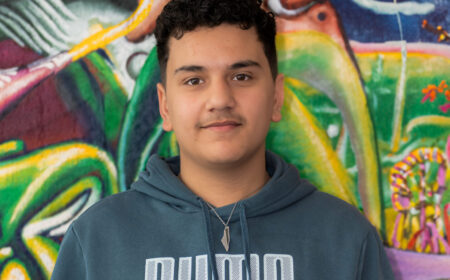
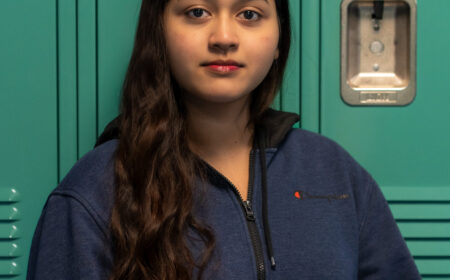
- Green Card Youth Voices: Immigration Stories from a Minneapolis High School – Angel Santos’s story
- Highlighter
- Pen/Pencil
- Drawing Paper
- Markers
Connections to 7 Cs of Ethnic Studies
- Cultivate: empathy, community actualization, cultural perpetuity, self-worth, self- determination, and the holistic well-being of all participants, especially Native people/s and people of color
- Conceptualize: imagine and build new possibilities for post-imperial life that promote collective narratives of transformative resistance, critical hope, and radical healing
Instructions
Day 1 – Ignite: Intro/Warm-Up
Welcome, agenda, announcements, learning target (slide 1)
Chunk: Community as a Source of Healing and Future Building (slide 2)
a. Warm-up activity
-
- Read as a class: “Perhaps the World Ends Here” by Joy Harjo (source)
- Turn + Talk Questions for post-reading:
- Gathered around the table are people, not one person. Around the “table” people can be hostile, but also joyous. Why is community necessary despite the ups and downs?
- What is necessary for people to gather “around the table”?
b. Mental health – Today’s lesson discusses immigration enforcement, family relationships, community safety, healing, and experiences of fear and uncertainty. Some students may personally or intergenerationally connect to these experiences in different ways. Please take care of yourself; participate in ways that feel comfortable and supportive.
Chunk
c. Community vs. Individualism
i. Activity: Move to the side if . . .
-
-
- On one side of the room, write on paper or a board, “I can do/solve this by myself.”
- On the other side of the room, “This can be done/solved with a group of people.”
- Read scenarios for students and have them move to the side they agree with.
- “You’re struggling to figure out your homework.”
- “You’re noticing a lot of garbage on the street by your house.”
- “Your city is destroyed by a natural disaster like a tornado or flood.”
- “Your community food shelf is running low.”
- “The park in your neighborhood has been vandalized.”
- Is every situation in your life meant to be handled by just you? When is it helpful to involve others?
- In many ways, community or collective work is easier and better for us mentally, emotionally, and physically.
-
ii. Slide 3: “Many countries in Central and South America rely on community to get through life. It is very common for homes to be multigenerational and honor those who have come before us!”
d. Communities and immigration as a form of future building (slide 4)
i. One of many reasons for immigration is the dream for a better life. (Break text, new paragraph/line.) What if that dream is threatened? What do you do?
-
-
- Ask students to share aloud; pick 3 people.
- Avoid pressuring students to disclose or feel the need to address personal topics.
- Prioritize emotional safety
- Realize students may not be ready to learn, talk, or engage in the topic of Metro Surge, as it could be triggering.
- Ask students to share aloud; pick 3 people.
-
ii. Slide 5: Mini task during lesson
-
-
- Have students read/listen to a story on this MPR article about immigrants during Metro Surge, the federal occupation of DHS agents in Minneapolis.
- Students answer in notebooks:
- Why did (insert name of person’s story you listened to) move to the US?
- What was their experience in the US during this time of the Metro Surge?
- In what ways did DHS and ICE threaten their rights to “life, liberty and the pursuit of happiness,” as promised in the Declaration of Independence?
-
iii. Ask students to share aloud; pick 3 people.
e. Slide 6: Threats to our future: Minneapolis during Metro Surge
i.
-
-
-
- Minneapolis came together: the protesters (source)
a. - Slide 7: Minneapolis came together: the organizers
a. - Slide 8: Minneapolis came together: the ICE watchers
a. - Slide 9: Community as a way to protect the future
- The way Minnesota came together for their neighbors demonstrates that people are willing to come together to believe in a future together—no matter their background.
- Ultimately, the front leaders were often women, mothers, and queer people leading mutual aid fundraisers for rent, food, transportation, and more.
- In many Latin American cultures, women are the ones tending and sacrificing a lot of their own social/emotional lives for their families.
- Minneapolis came together: the protesters (source)
-
-
f. Slide 10: Esperanza – Hope
-
- Esperanza means “hope” in Spanish.
- Watch video of how to say it here: https://www.youtube.com/watch?v=YIFVG-PNK9o
- Esperanza is often seen a cultural value, as many Latino people in the US have a connection to Latin American immigration or displacement of Indigenous lands.
- That’s why it is important to learn about familial origin stories passed down through culture, traditions, art, and more.
- Ask students: Is there a way to honor difficult times? Is it better to do it alone or in community?
- Dive deeper (suggested) and consider talking about Afro-Latino community traditions, Indigenous approaches to collective care, and acknowledging the differences in healing/community practices through this link:
- Esperanza means “hope” in Spanish.
Day 2 – Chew: Class Work Time Instructions
- Pick a partner.
- Read the story of Angel Santos (have them printed).
- Annotate Angel’s story.
- Circle words you do not know.
- Highlight sections where Angel shares his relationship with his family.
- Underline sections where Angel describes acceptance (from others or himself).
- Star sections that demonstrate dreams of the future.
- Slide 11: Add a pair to your pair!
-
- Share your annotations and discuss reflection questions together.
- Partner Discussion Questions (record or walk around during this)
- Pick an annotation that stuck out to you—why did it impact you?
- What/who helped Angel when he moved to the US?
- Why was it difficult for Angel to move to the US?
- Who helped Angel heal through his hard times?
- Angel mentions his complicated relationships with his family. Why are relationships, despite being complicated, important for people? How did they impact Angel’s life?
- In what ways does Angel demonstrate healing?
- How do communities protect one another?
- What does belonging look like for Angel? For you?
g. Day 3 – “Inviting Others to Our Table” activity (slide 12)
This activity may require this day to be a planning day, and another day for an execution day.
-
- Think of the poem we read at the beginning of class. Now, think of what you’d host at your table.
- Students have to plan something that allows for centering community and joy (this looks like an activity + dialogue) → “integrate joy into an activity while engaging in dialogue through prompts made to spark feelings of belonging and inspiration”
- Students will then set up at a table in a common area during the hour, ready with their activity and dialogue. Teachers are encouraged to invite staff and their classrooms to come on down to engage with students’ tables.
- Each table should show:
- Invitation and inclusivity—is your table open to all?
- Community nurturing—are you fostering community and a sense of belonging?
- Future building—how does your table inspire others to build a future for all?
- Think of the poem we read at the beginning of class. Now, think of what you’d host at your table.
- Examples:
-
- Collaging images that inspire good mental health while talking about mental health resources or prompts that promote checking in with oneself vulnerably.
- Journaling and sharing with your tablemate what you’re comfortable sharing.
- Sharing a meal with prompts to stir conversations with each other.
- Puzzling with prompts to stir convos with each other.
- Playing chess or cards—talk about friendly competition and what it means to lose.
- Gather inspo from the poem!
- Many, many more!
Review: Large Group Whipshare Discussion (for both planning and execution day)
- How does your table represent the future you wish for?
- What is it like to build toward that future?
Multilingual and ELL Supports
- Provide English sentence stems to help students contribute to whole class and small group discussions.
- Enable captions on videos (in English and/or home language).
- Allow students to think about their answers by writing them in their home language first prior to teacher questions during the lesson (chunk), and while sharing annotations and reflection questions with a partner.
- Allow students to read Angel’s story in their home language.
- Allow students to annotate in their home language.
Vocabulary and Definitions
- Community: a sense of belonging within a group due to shared interests, attitudes or goals
- Collective: people or entities that unite voluntarily for a common purpose
- Individualism: a perspective that draws attention to independence and freedom of action for individuals over the collective interests
- Future building: a perspective that looks forward to a future that is sustainable and resilient and centers the well-being of the collective community
Resource List
- Coco clip www.youtube.com/watch?v=0TYbf1pw1g8
- Encanto clip www.youtube.com/watch?v=Yp5nPGWWMh4
- “Perhaps the World Ends Here” https://www.poetryfoundation.org/poems/49622/perhaps-the-world-ends-here
- “Minnesota Proved MAGA Wrong” www.theatlantic.com/ideas/2026/01/the-neighbors-defending-minnesota-from-ice/685769
- Liberated Ethnic Studies Model Curriculum Values and Principles (7 Cs) https://drive.google.com/file/d/1cGOs7rsY9wT2qI-yIQh5dye8snRjGYxr/view