
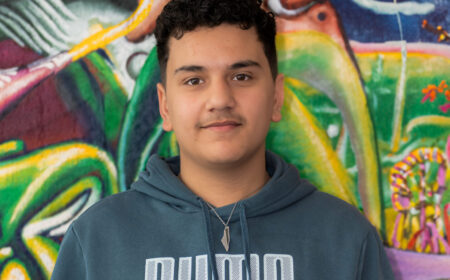
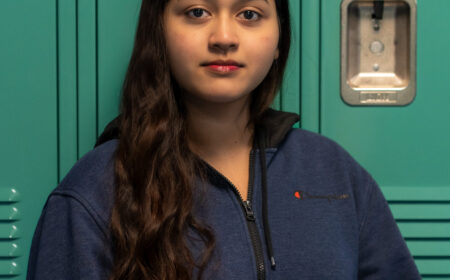



Unit 1: Identity and Language – Identity Through Language: Ashti’s Story
Time Frame
- 2 class periods
Materials
- Green Card Youth Voices: Immigration Stories from a Fargo High School – Ashti Mohamed Ali’s story and video
- Highlighter
- Pencil and Notebook
- Vocabulary and Definitions Handout
Connections to the 7 Cs of Ethnic Studies
- Cultivate: empathy, community actualization, cultural perpetuity, self-worth, self-determination, and the holistic well-being of all participants, especially Native People/s and People of Color
Instruction (ICCR)
Day 1 – Identity, Language, and Iraqi Cultural Background
Ignite
Show these visuals:
- Map of Iraq
- Baghdad on the map
- Photos of Iraqi families, schools, and daily life
Provide brief context:
- Iraq is an Arab country.
- Many people there speak Arabic.
- Some communities also speak Kurdish and other languages.
- There are different Arabic dialects across the Arab world.
Quick write:
Respond to one of the following prompts:
- What languages are part of your identity?
- When have you felt like you belonged, and when have you felt like you didn’t belong?
- What did you learn about Iraqi culture?
- What surprised you?
- How can language help people stay connected to culture and family?
Invite students to share with a partner.
Vocabulary Introduction
Distribute the Vocabulary and Definitions Handout before viewing Ashti’s video. Review each word, discuss the definition, example, and critical question. Students should keep the handout on their desks during all activities.
Cultural Background
Iraq is a country in the Middle East with a rich and ancient history. Baghdad, where Ashti was born, is the capital city and one of the oldest cities in the world. Iraq is home to many different ethnic and religious groups, including Arabs and Kurds.
The Kurdish people are an ethnic group with their own language (Kurdish) and culture, found primarily in northern Iraq, Turkey, Iran, and Syria. Many Iraqi and Kurdish families came to the United States as refugees or immigrants, often fleeing violence, war, or political persecution. Minnesota and cities like Fargo, North Dakota have significant Iraqi and Kurdish communities. These communities have brought rich cultural traditions, languages, food, music, and values to the United States.
The name Ashti (آشتی) means peace in Kurdish. Names in Iraqi and Kurdish culture often carry deep meaning connected to family history, values, or hopes for the future.
Watch Ashti’s Story
After watching video, have students think-write (one sentence):
- What languages are part of your identity?
- When have you felt like you belonged, and when have you felt like you didn’t belong?
- What did you learn about Iraqi culture?
- What surprised you?
- How can language help people stay connected to culture and family?
Exit Ticket
- What is one thing you learned about Iraqi culture, language, or identity?
Day 2 – Ashti’s Story, Identity, and Belonging
Warm-Up Review
Quick Partner Discussion:
- What do you remember about Ashti’s story?
- What language challenges did she face?
- What did you learn about Iraq or Iraqi culture yesterday?
Chunk
Read and Analyze Ashti’s Story:
- Preview vocabulary list
- Read Ashti’s story together as a class or independently.
- Stop at certain points for annotation and discussion.
Students annotate parts related to the following questions:
- Ashti’s story says Iraq/Baghdad was unsafe. What clues help you infer why it might have felt unsafe?
- What might Ashti have lost or had to leave behind, and how could that affect her identity or sense of belonging?
- What language challenges did Ashti face when she came to the US?
- How did those challenges impact her identity and sense of belonging?
- Why is language important to culture?
- What parts of Ashti’s identity stayed the same after moving?
- What parts of her life changed?
Chew
Partner Discussion
Students exchange ideas about identity, language, and belonging using text-based evidence. Refer to their annotated reading during discussion.
Discussion Roles
Student A shares for 1 minute using evidence from the text.
Student B listens and responds, adding on their thoughts.
Switch roles.
Make sure students use at least one of the vocabulary words.
Sentence Stems
- Based on the clues or details in Ashti’s story ___, I infer that Iraq/Baghdad may have been experiencing ___, which created a sense of . . .
- Her text says it was unsafe. One clue is . . .
- Ashti likely left behind ___, which could affect her identity by . . .
- A language challenge Ashti faced was . . .
- She had difficulty with ___ when she came to the USA.
- These challenges may have affected her identity by . . .
- This could impact her sense of belonging because . . .
- Language helped Ashti connect to ______.
- One part of Ashti’s identity is ______.
- Moving to a new country changed ______.
- It did not change ______.
Graphic Organizer
Create a four-quadrant graphic organizer chart to support the conversation.
Identity Reflection
Choose one question to answer:
- How did language shape Ashti’s identity?
- How did moving to a new country affect Ashti’s sense of belonging?
- What parts of Ashti’s identity stayed the same after moving?
- How did Ashti stay connected to her culture and family?
Reflection Sentence Stems
- One part of Ashti’s identity is . . .
- Language shaped her identity by . . .
- Moving to a new country affected her because . . .
- Ashti stayed connected to her culture by . . .
- I think identity is connected to language because . . .
Writing Task
Prompt
Explain how language, culture, and experiences shaped Ashti’s identity and sense of belonging. Use two examples from the text.
Structure
- Main idea: ________
- Evidence from text: ________
- Explanation: ________
Exit Ticket
Write one word or one sentence.
- How did language shape Ashti’s identity and sense of belonging?
- Ashti’s story shows that language, identity, and belonging are connected because . . .
Multilingual and ELL Support
- Model the use of sentence stems included in the lesson.
- Show Ashti’s video with captions in students’ home language as an alternative to the reading.
- Convert Ashti’s story to students’ home language so they can understand the context of her story.
- Allow students who are WIDA level 1–2 to fill in the blank instead of writing.
Resource List
- Green Card Youth Voices: Immigration Stories from a Fargo High School – Ashti Mohamed Ali’s story and video
- Background on why Iraq was dangerous at that time when Ashti and her family emigrated (this is for teacher context) www.unrefugees.org/emergencies/iraq
- Liberated Ethnic Studies Model Curriculum Values and Principles (7 Cs) https://drive.google.com/file/d/1cGOs7rsY9wT2qI-yIQh5dye8snRjGYxr/view

Unit 1: Identity and Language – Roots of Oromo
Time Frame
- 1–2 class periods
Materials
- Green Card Youth Voices: Immigration Stories from a Minneapolis High School – Ikrem Nuru’s video
- Appendix: Student Handouts
- Oromo images (see pictures here)
Connections to the 7 Cs of Ethnic Studies
- Cultivate: learning about the Oromo history, people, and language to provide opportunity for identity affirmation and healing
- Center: centering Oromo youth and their lived experiences navigating institutional structures as new immigrants
Instruction (ICCR)
Ignite
- Have students Turn and Talk and complete the KWL chart (see attachment/appendix 1) by answering the question below:
- What do you know about the Oromo people and language?
Chunk 1
- Provide a short reading and analyze the text of “Oromo People, Culture, and Language” (see attachment/appendix 2) with students to help students understand the history, culture and language of the Oromo people.
- Use “5-4-3-2-1 Close Reading Strategy” (see attachment/appendix 3), an activity where students identify five key words, four interesting facts, three new words, two connections, and one question.
Chunk 2
- Have students watch Ikrem Nuru’s video.
- After watching the video, have students create a timeline of events they saw and heard; you can provide them scrambled event cards and have them sort them in chronological order.
Chew
- Assemble students in groups of two to four. Have them Turn and Talk and answer the following questions below:
- Ikrem was born in ___________ in the country of ___________.
- She came to the USA in ___________.
- Her goal is to become ___________.
- Then, have students complete the comprehension questions about Ikrem Nuru’s story (see attachment/appendix 4).
Review
- Have students pair-share the following questions.
- How many languages do you speak?
- What are those languages?
- How do those languages impact your identity?
- Then, have students share their identity life events with a table partner (see attachment/appendix 5).
- When sharing is done, ask students:
- What new information did you learn about your classmate?
- What connections were you able to make with them?
- What is one question you have for them?
- Lastly, have students complete the “What I Learned” column on the KWL chart.
Multilingual and ELL Support
- Provide visuals (see slides/attachments).
- Provide graphic organizers as student handouts.
- Provide sentence stems for written work and verbal share-outs / small group discussions.
- Annotate text using different colors for 5-4-3-2-1 close reading strategy.
Vocabulary and Definitions
- Boorana (Buh-RAH-nuh): one of the largest Oromo ethnic groups
- Barentu (Bah-REHN-too): branch of Oromo people
- Cushitic (Kuh-SHIT-ik): group of languages and peoples of the Horn of Africa
- Afaan: language
- Afaan oromo (AH-faan oh-ROH-moh): Oromo language
Resource List
- Book-Alamayyoo Haile, 2007
- The Oromo and the Christian Kingdom of Ethiopia, 1300–1700 by Mohammed Hassen
- Book – Hundasaa Waaq-woyya. 2013
- Partisan Discourse and Authentic History by Tabor Wami
- Oromo Images (see pictures here)
- Liberated Ethnic Studies Model Curriculum Values and Principles (7 Cs) https://drive.google.com/file/d/1cGOs7rsY9wT2qI-yIQh5dye8snRjGYxr/view